A pool permit is rarely the expensive line item in a swimming pool budget — the pool itself makes sure of that — but it's the one that stops construction when it's missing, and the fees surprise people because they're structured differently in every city. Some charge flat rates. Some charge a percentage of the project valuation. Some add barrier, electrical, and plumbing permits on top that double the apparent cost.
The short answer: most residential pool permits cost between $100 and $1,500 depending on where you live, with $200 to $500 typical in mid-sized cities. Plan review fees (Houston charges $94 for a residential pool or spa), electrical permits for the pump and bonding, and barrier permits for the safety fence are often billed separately — so the honest budget for permitting a typical in-ground pool is $300 to $800 in most jurisdictions.
Here's what the money actually buys, how real cities structure their fees, and where costs climb.
Table of Contents
- 1Quick Answer: What You'll Pay For
- 2What the Permit Money Actually Buys
- 3How Real Cities Structure Pool Permit Fees
- 4Flat and schedule-based fees
- 5Valuation-based fees
- 6Barrier-first jurisdictions
- 7The 48-Inch Rule That Shapes the Whole Project
- 8What Drives Pool Permit Costs Up
- 9What a Typical Pool Permit Bill Looks Like
- 10Above-Ground and Storable Pools: The Lighter Path
- 11Timeline: What the Money Is Waiting On
- 12Paying Less Without Cutting Corners
- 13Frequently Asked Questions
- 14How much does a pool permit cost?
- 15Do I need a permit for an above-ground pool?
- 16Why do I need a separate barrier permit for my pool fence?
- 17What is pool bonding and does it need a permit?
- 18Is the plan review fee separate from the building permit?
- 19Does the pool builder pull the permits, or do I?
Quick Answer: What You'll Pay For
| Permit Component | Typical Cost | What It Covers |
|---|---|---|
| Building permit (pool shell + decking) | $100–$1,000+ | Structural review, setback compliance, inspections |
| Plan review fee | $50–$300 | Reviewer time before issuance — sometimes billed separately |
| Electrical permit | $50–$300 | Pump, bonding, GFCI protection, lighting |
| Barrier / fence permit | $0–$150 | 48-inch safety barrier and gate compliance |
| Plumbing / gas permit (if applicable) | $50–$200 | Heater gas lines, water supply lines |
That's the whole stack for a typical in-ground installation. Above-ground pools and prefab spas often follow a lighter path, covered below.
What the Permit Money Actually Buys
A pool permit isn't a filing fee — it funds a sequence of inspections that happen at the worst possible moments to discover a problem. The footing and steel inspection verifies the shell's reinforcement before concrete buries it. The plumbing and pressure test happens before that same concrete. The electrical bonding inspection — the one most homeowners have never heard of — verifies that the rebar, pump, and metal elements are tied together so a faulty pump can't energize the water. And the barrier inspection confirms the fence, gates, and alarms meet code before the pool fills with water and becomes the neighborhood's most attractive hazard.
Every one of those checkpoints exists because undoing a pool mistake after pouring means jackhammering. Cheap relative to the pool, the permit is expensive relative to skipping it — because unpermitted pools surface reliably at resale, and retroactive permits can require exposing work you'd rather not dig up.
How Real Cities Structure Pool Permit Fees
The fairest way to preview your own bill is to see how differently municipalities bill for the identical pool. Three structures cover most of America:
Flat and schedule-based fees
Houston publishes a citywide fee schedule where the residential pool or spa plan review runs $94, with building and trade fees itemized alongside. Flat-fee cities are the easiest to budget: the number on the schedule is the number on your receipt, regardless of whether the pool is a plunge pool or a lagoon.
Valuation-based fees
Miami's fee schedule is typical of valuation-based cities: residential permit fees are calculated per $100 of estimated construction cost, with minimums and maximums set by the schedule. The same pool therefore permits for different prices in different years — construction inflation moves the fee — and a $90,000 pool-and-deck package pays meaningfully more than a $45,000 shell-only project.
Barrier-first jurisdictions
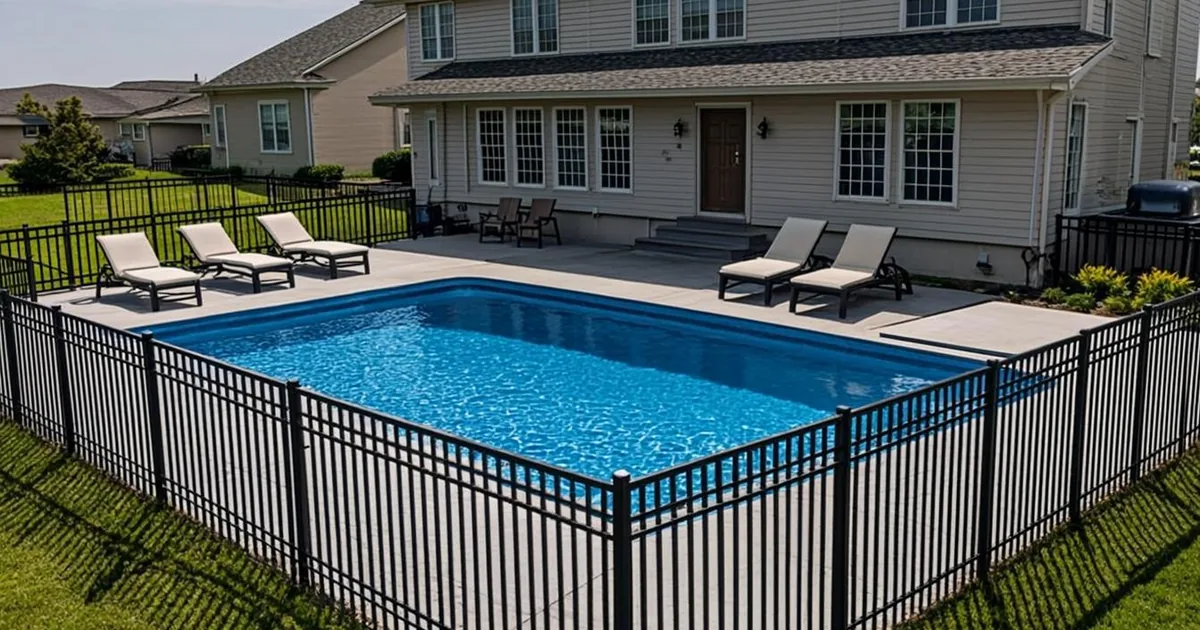
Phoenix and the counties around it treat the safety barrier as its own permitted milestone. Phoenix's pool barrier program requires barrier permits and inspection for residential pools, and Maricopa County is explicit about sequence: barrier permits must be issued before installing the barrier, plastering the pool, or filling it with water. In these jurisdictions the barrier isn't an add-on line item — it's a gate the whole project waits on.
County territory has its own schedules entirely: Travis County, Texas runs pool permitting for unincorporated addresses with its own application and fee structure, separate from the City of Austin's. One address can sit ten minutes from another with a completely different pool-permit bill.
💡 Tip: Ask the permit desk one question before applying: "Is plan review billed separately from the building permit?" In some cities the $94-style review fee is inside the total; in others it arrives as a second invoice mid-process. It's the most common reason pool permit budgets run 30% over.
The 48-Inch Rule That Shapes the Whole Project
Nearly every barrier fee and inspection traces back to one number. The International Swimming Pool and Spa Code requires pool barriers at least 48 inches above grade, with self-closing, self-latching gates and limits on climbable features near the barrier. States adopt it with local amendments — a few require 5 or 6 feet, and some add door alarms or covers as alternate layers.
For budgeting, the code detail matters because barrier compliance has its own price tag beyond the permit: pool-rated fencing runs well beyond ordinary fence costs, self-latching hardware is specific, and in barrier-first jurisdictions the inspection failure means the pool simply doesn't fill on schedule. Homeowners who fold barrier requirements into the fence plan early — height, gates, and the climbable-zone rules — pay once instead of twice. Our guide to fence height rules and permits covers the fence-side details that pair with pool barriers.
What Drives Pool Permit Costs Up
- Valuation-based fee structures. In per-$100 cities, every upgrade — spa integration, premium decking, outdoor kitchen rough-ins — nudges the permit upward.
- Separate trade permits. Electrical, plumbing, and gas each carry their own fees, and pool projects touch all three more often than not.
- Spas and attached features. A spillover spa can trigger additional review; some jurisdictions permit it separately.
- Flood zones and special districts. Floodplain development review adds engineering requirements and fees; conservation or hillside districts add more.
- Re-inspection fees. Failed bonding or barrier inspections commonly carry re-inspection charges — the fee is small, but the schedule slip is what costs real money with a builder's crew standing by.
What a Typical Pool Permit Bill Looks Like
Abstract ranges get clearer with actual arithmetic, so here's the same $65,000 in-ground pool permitted three different ways — the three structures you're most likely to encounter:
In a flat-fee city: the building permit for a residential pool sits at a published flat rate, say $250, plan review adds $94 in the Houston pattern, the electrical permit runs $120, and the barrier permit costs $75. Total: roughly $539, known to the dollar before applying, unchanged if the pool grows to $80,000.
In a valuation-based city: fees calculate from project value at a per-$100 rate — the Miami pattern. At a $65,000 valuation and a combined rate in the range valuation cities typically set, the building-side fees land somewhere between $450 and $950 depending on the exact schedule, plus the same electrical and barrier tickets. Total: often $650 to $1,300, and higher if decking, a spa, or an outdoor kitchen ride on the same permit.
In a barrier-first jurisdiction: the building permit may look conventional, but the barrier permit is a scheduled milestone the builder's timeline waits on — Phoenix-style sequencing where barrier issuance gates plastering and filling. The dollar amounts resemble the flat-fee city, but a barrier inspection failure costs schedule days with a crew on standby, which is the expensive version of "cheap."
Three conclusions fall out of the arithmetic. First, the same pool can permit for twice as much money two counties apart, purely from fee structure. Second, electrical and barrier tickets cluster in the $150-to-$450 range almost everywhere, so the building-side structure determines most of the variance. Third — and this is the practical takeaway — asking the permit desk whether fees are flat or valuation-based tells you within one phone call whether your $65,000 dream pool's permit is a $500 line item or a $1,200 one.
✅ Key takeaway: Pool permitting rarely exceeds 2% of project cost — but it gates 100% of the schedule. Budget the fees by all means; budget the calendar the same way.
Above-Ground and Storable Pools: The Lighter Path
Above-ground pools follow the same code but usually a simpler process, and storable pools are often exempt entirely. Most codes that adopt the pool code exempt small temporary or storable pools below modest depth thresholds — the classic 24-inch line — reasoning that a pool you can drain and move presents a different risk than a permanent basin. Above-ground pools with proper barriers and filtration typically need a permit but skip the heavy structural review, since the shell arrives engineered; expect the electrical and barrier pieces to remain fully required.
The expensive mistake in this category runs the other direction: treating a cheap above-ground pool as exempt when the local code requires a barrier permit for anything deeper than the exemption line. Enforcement spikes every summer in barrier-first states, and the fines land on the homeowner, not the store that sold the box.
⚠️ Warning: Never assume the pool builder pulled the barrier permit. In barrier-first jurisdictions the permit names the homeowner, and filling the pool before barrier inspection is a violation even when a contractor handled the paperwork. Confirm which permits exist before the first truck arrives.
Timeline: What the Money Is Waiting On
Pool permits move at ordinary residential-permit speed: same-week issuance in schedule-fee cities with light review, two to six weeks where plan review is involved, longer in valuation-based systems during busy season. The barrier permit usually issues alongside the building permit, and inspections pace themselves to construction. The schedule variables — review queues, revisions, busy season — are the same ones covered in how long building permits take, and pool projects add one wrinkle: digging season is permit-application season, so spring applications queue behind each other in pool-heavy states.
Budget the permit window into the build contract explicitly. Builders quote construction time from permit issuance, not from signing — the gap between those dates is where "the pool's not done" complaints are born.
Paying Less Without Cutting Corners
Pool permits reward preparation more than negotiation. A complete application — site plan with setbacks and easements, barrier plan, equipment electrical layout — skips the resubmittal cycle where cities sometimes charge revision fees and always charge time. Bundling trades under one general permit where the city allows it trims a little overhead. Scheduling the bonding and barrier inspections for the same visit, where the department allows it, saves a re-trip. And asking the building department for the pool-permit checklist — most publish one — costs nothing and prevents the two most common fee surprises: separate plan review invoices and re-inspection charges.
The stack of fees that looks bureaucratic at the start is, item by item, the inspection sequence that keeps an unpermitted pool from becoming the most expensive object in the backyard. Pay the stack in order, and the pool fills on schedule with nothing buried that shouldn't be.
For the surrounding context — how pool permits compare to other residential projects city by city — see building permit costs by state, the fee-pattern breakdown in residential building permit fees, and a worked example of a remodel budget in kitchen remodel permit costs.
Frequently Asked Questions
How much does a pool permit cost?
Most residential pool permits run $100 to $1,500 depending on the city, with $200 to $500 typical in mid-sized markets. Flat-fee cities charge a set amount regardless of pool size; valuation-based cities calculate per $100 of construction cost. Electrical, barrier, and plumbing permits are often billed separately, so budget $300 to $800 total for a typical in-ground pool project.
Do I need a permit for an above-ground pool?
Usually yes for anything permanent, though the process is lighter than in-ground permitting — the engineered shell skips heavy structural review. Electrical and barrier requirements still apply in full. Small storable pools below local depth thresholds, commonly around 24 inches, are exempt in most codes. Rules vary by city and county, so confirm before buying.
Why do I need a separate barrier permit for my pool fence?
Pool barriers get their own permit and inspection because barrier failure is a child-safety issue, not a construction issue. The inspection verifies the 48-inch minimum height, self-closing and self-latching gates, and non-climbable zones before the pool fills. In barrier-first jurisdictions like Phoenix and Maricopa County, the barrier permit must be issued before plastering or filling.
What is pool bonding and does it need a permit?
Bonding ties the pool's metal components — rebar, pump, ladders, lighting — together and to ground so electrical faults can't energize the water. It's part of the electrical permit and gets its own inspection before the deck pours. It's one of the most important inspections in the entire pool project, and re-inspection fees apply if it fails.
Is the plan review fee separate from the building permit?
It depends on the city. Some jurisdictions bundle plan review into the permit total; others bill it separately — Houston, for example, publishes a $94 plan review fee for residential pools and spas alongside its other fees. Ask the permit desk directly before applying; a surprise mid-process invoice is the most common reason pool permit budgets run over.
Does the pool builder pull the permits, or do I?
Most builders pull the permits as part of the contract, but the permits typically name the homeowner as the responsible party. Confirm in writing which permits exist — building, electrical, barrier, plumbing — before construction starts, and never let the pool fill before the barrier inspection, whatever the paperwork arrangement is.