Fence height is one of the most common reasons homeowners end up in front of a permit counter — and one of the easiest problems to avoid, because the answer follows a pattern once you know where to look. The tall privacy fence you want for the backyard is usually fine. The same fence across the front of the house usually is not. And if there's a pool, the rules change completely.
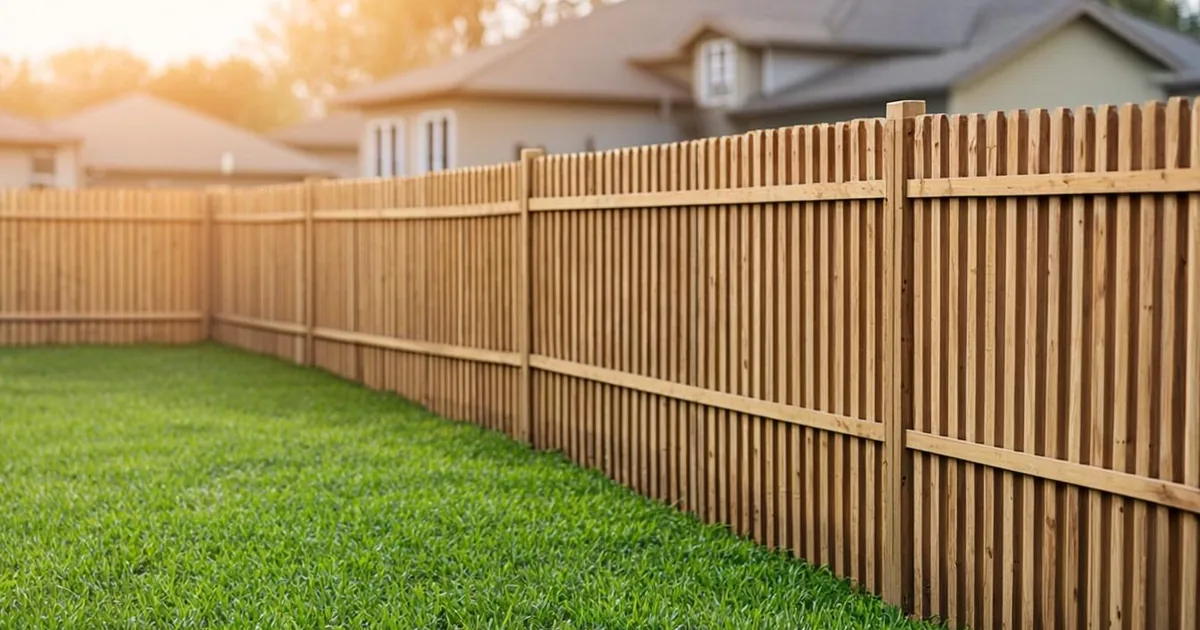
The short answer: in most American cities you can build a fence 6 to 7 feet tall without a building permit, as long as it's a standard wood, vinyl, or chain-link fence in a side or rear yard. The model residential code exempts fences up to 7 feet, and most local codes land close to that number. Front yards are typically capped at 3 to 4 feet, and pool barriers must reach at least 48 inches no matter where they sit.
Those numbers come with real exceptions, though. Some cities let you go higher, some cap residential fences lower, and masonry or concrete walls are treated differently almost everywhere. Here's how the rules fit together, so you can figure out where your fence falls before you buy the first post.
Table of Contents
- 1Quick Answer: Fence Height Without a Permit
- 2The 7-Foot Baseline in the Model Code
- 3What Real Cities Actually Allow
- 4Seattle, WA — 8 feet, with a masonry catch
- 5Austin, TX — 7 feet, and mind the floodplain
- 6Santa Rosa, CA — 7 feet, lattice included
- 7New York City — 6 feet and lower
- 8Front Yard Fences: The 3-to-4-Foot Rule
- 9Pool Fences: 48 Inches, No Exceptions
- 10How Fence Height Is Measured
- 11Zoning Rules That Apply Even When No Permit Is Needed
- 12HOA Rules: The Third Layer
- 13If Your Fence Ends Up Too Tall
- 14Your Pre-Build Checklist
- 15Frequently Asked Questions
- 16How tall can a fence be without a permit?
- 17Do I need a permit for a 6-foot privacy fence?
- 18How tall can a front yard fence be?
- 19How tall does a fence around a pool need to be?
- 20Can I build an 8-foot fence in my backyard?
- 21What happens if I build a fence taller than allowed?
Quick Answer: Fence Height Without a Permit
Permit rules attach to height, but the height that matters is the one in your city's code, not your neighbor's. The table below shows the pattern most jurisdictions follow:
| Fence Situation | Typical Height Allowed Without a Permit |
|---|---|
| Side or rear yard, standard fence (wood, vinyl, chain-link) | 6–7 ft in most cities |
| Front yard fence | 3–4 ft is the common cap |
| Masonry, concrete, or stone wall | Often capped lower — frequently 4–6 ft |
| Fence around a swimming pool | 48 in minimum — usually permit territory |
| Decorative extensions (lattice, toppers) | Often must stay under the same limit; some cities add 1–2 ft of open lattice |
If your project fits the first row, you're probably in exempt territory. Every other row deserves a call to the building department before you dig.
The 7-Foot Baseline in the Model Code
The 2024 International Residential Code, which most states adopt as the base for their residential building rules, lists "fences not over 7 feet (2,133 mm) high" as work exempt from permit in its Section R105.2. That single line is where the familiar "7-foot rule" comes from, and it explains why 6-foot privacy fences are so universal in American backyards — they sit comfortably below the exemption with room to spare.
Adopting the IRC doesn't lock a city into every exemption. States amend the code before adopting it, and cities amend it again on top of that, so the 7-foot ceiling can become 6 feet or 8 feet depending on where you live. The exemption also covers the building permit only. Zoning rules — how close the fence sits to the property line, which yard it's in, how tall it can be — apply whether or not anyone inspects the fence. A fence can be perfectly legal to build without a permit and still violate zoning, which is a distinction that surprises a lot of homeowners after the posts are set.
✅ Key takeaway: "Exempt from permit" never means "exempt from rules." Height caps, setbacks, and style restrictions in your zoning code apply to every fence, permit or not.
What Real Cities Actually Allow
Model codes set the baseline; local ordinances set the number you'll be held to. A few examples show how much they can differ:
Seattle, WA — 8 feet, with a masonry catch
Seattle's Department of Construction & Inspections does not require a permit for a fence up to 8 feet tall, unless it includes masonry or concrete elements higher than 6 feet. Seattle also allows up to 2 extra feet of open, decorative framework on top of a 6-foot fence in some cases — a rare allowance that recognizes the difference between a privacy fence and a vine trellis.
Austin, TX — 7 feet, and mind the floodplain
Austin's work-exempt list mirrors the model code: a fence no taller than 7 feet needs no building permit. The city adds one condition worth remembering — if your lot sits in a flood hazard area, the exemption disappears and you're back in permitting territory, because fences redirect floodwater in ways that aren't obvious at the fence counter.
Santa Rosa, CA — 7 feet, lattice included
Santa Rosa requires a building permit for any fence exceeding 7 feet, and clarifies the measurement question homeowners ask most: a 6-foot fence with a foot of lattice on top can be built without one. That lattice grace is not universal, so don't assume it travels.
New York City — 6 feet and lower
NYC's Department of Buildings requires no permit for fences 6 feet or under at one- and two-family homes, and its building code caps fences in residence districts at 4 to 6 feet depending on the zone. On a city lot, the answer is almost always "6 feet, no higher."
Notice the spread: 6 feet in NYC, 7 feet in Austin and Santa Rosa, 8 feet in Seattle. All four adopt versions of the same national code, and none of them agree exactly. That's why the honest answer to "how tall can I go?" always starts with your own city's fence code — and why a five-minute search for "[your city] fence height permit" before you order materials is worth more than any general guide.
Front Yard Fences: The 3-to-4-Foot Rule
Front yards follow a stricter logic than backyards. A tall fence across the front blocks sight lines for drivers leaving driveways, hides pedestrians from passing cars, and changes the streetscape for everyone on the block. So most codes split the lot: generous heights in side and rear yards, 3 to 4 feet in the front — sometimes lower in historic districts, sometimes higher with conditions.
Two details trip people up in front yards. First, some codes apply the low front-yard cap not just to the fence but to hedges and retaining walls in the same area, so a 5-foot arborvitae row can violate the same rule as a 5-foot fence panel. Second, "front yard" usually means everything between the front wall of the house and the street property line — including the strip along the driveway. A fence that starts in your side yard but extends past the front wall of the house can cross into front-yard rules without you noticing.
Front setbacks complicate this further, since many codes also push fences back from the sidewalk. Our guide to front yard setback requirements walks through those distance rules, and the height rules stack on top of them.
💡 Tip: If you want privacy near the front of the house, look at where the "front yard" boundary actually falls in your zoning code. Fencing the first 10 feet of the side yard behind the front wall often lands you in side-yard rules — 6 feet tall, no permit — instead of the 3.5-foot front-yard cap.
Pool Fences: 48 Inches, No Exceptions
The moment a fence surrounds or guards a swimming pool, it stops being a zoning question and becomes a safety-code question. The International Swimming Pool and Spa Code — adopted alongside the residential code in most states — requires the top of a pool barrier to be at least 48 inches above grade, measured on the side facing away from the pool. Gates must be self-closing and self-latching, and the latch has to sit high enough that small children can't reach it.
Two things make pool fences different from every other fence in this guide. First, the 48-inch minimum is a floor, not a ceiling — some cities and states require 5 or 6 feet. Second, pool barriers typically need their own permit and inspection even in cities where a 6-foot backyard fence doesn't. The inspection exists because a pool barrier failure is measured in drowned children, and inspectors take it seriously: gaps under the barrier, climbable horizontal rails, and gates that swing the wrong way all fail.
If your fence is part of a pool project, treat the whole project as permit-required until your building department says otherwise. The rules matter enough that most pool permits name the barrier requirements directly on the permit.
How Fence Height Is Measured
When a code says "7 feet," the natural next question is: measured from where? The standard answer is from the natural grade — the ground as it exists, not the ground after you add a berm or mound soil along the fence line. Building up the dirt to get extra fence height is a recognized trick, and codes close it by tying the measurement to natural or finished grade at the fence itself.
Sloped lots create the second most common measurement dispute. On a hill, a fence that's 6 feet above grade on the downhill side can look 9 feet tall from the neighbor's patio below. Some jurisdictions solve this by averaging the height along the fence run; others measure at the highest point. If your yard slopes, ask the building department which method they use before you build — this is a five-minute question that prevents a five-month dispute.
Decorative toppers get their own treatment. Open lattice is the most common allowance (Santa Rosa's 6-plus-1 rule is a clean example), but pointed finials, trellis panels, and solid caps are counted differently from city to city. A solid cap usually counts toward height; an open lattice sometimes doesn't. Photos of the exact topper, sent to the permit desk in an email, get you a written answer you can keep.
Zoning Rules That Apply Even When No Permit Is Needed
Building-department exemptions and zoning rules are separate systems, and the fence can be legal in one and illegal in the other. Four zoning rules matter most:
- Setbacks. Most codes let side- and rear-yard fences sit on or very near the property line, but front and corner setbacks often push fences back several feet. Distance rules are covered in our guide to fence setback requirements.
- Corner-lot sight triangles. On corner lots, both yards facing a street are usually treated as "front" for fence purposes, and the intersection corner carries a low height limit inside a defined sight triangle so drivers can see cross traffic.
- Finished side out. Many codes require the finished, attractive side of the fence to face the neighbor and the street. It's a small rule with a big repair cost if you get it backwards.
- Visibility limits. Some cities ban near-solid fences above certain heights on the approach to driveways and intersections, independent of the general height cap.
Easements sit slightly outside zoning but bite just as hard. A fence across a drainage or utility easement can be ordered removed — without compensation — the next time the utility or the city needs the corridor. The easements are mapped on your property's plat or on your county's GIS viewer, and checking one afternoon of paperwork beats rebuilding a fence.
⚠️ Warning: Height and placement rules are two different violations. A 6-foot fence that's fully exempt from a building permit can still be ordered moved or torn out if it sits over the property line or inside an easement. Setbacks first, then height.
HOA Rules: The Third Layer
If your neighborhood has a homeowners association, add a third rulebook on top of the building code and the zoning code — and expect it to be stricter than both. HOA covenants commonly cap fences below the city's limit, restrict colors and materials, require the finished side toward shared spaces, or ban front-yard fences entirely, in cities where the city itself would allow one.
The practical sequence matters: get the HOA's architectural approval before construction, because an approved-but-noncompliant fence still gets built at your expense and removed at your expense. Height disputes inside an HOA are rarely about the permit at all — the permit exemption only covers city rules, not the private covenants you agreed to when you bought the house. Our breakdown of how HOA rules interact with building permits explains the two-track approval in detail.
If Your Fence Ends Up Too Tall
Say the fence is already up and a neighbor complains, or the city sends a notice. The path is almost always the same: the code enforcement officer measures the fence, compares it against the zoning height cap and any permit records, and issues a violation notice if it's over. From there you typically get options — apply for a retroactive permit if one exists for your situation, modify the fence down to legal height, or apply for a variance if your lot's slope or layout makes the cap unreasonable. Ignoring the notice is the one move that reliably makes everything worse, because fines in most cities accrue per day.
The enforcement path — and what it costs when a project goes all the way to stop-work orders and penalties — is the same machinery described in what happens if you build without a permit. Fences rarely reach that point, but tall fences near pools and in sight triangles are exactly the cases inspectors prioritize.
Your Pre-Build Checklist
- Find your city's fence code. Search "[city] fence height permit" and read the city's own page — most building departments publish a fence handout with the exact numbers.
- Check which yard the fence is in. Front, side, rear, and corner-lot street sides follow different caps.
- Confirm the material. Masonry and concrete walls usually cap lower than framed fences.
- Look for pools. Any fence that acts as a pool barrier needs 48 inches minimum, plus a permit in most places.
- Check setbacks and easements. Height compliance means nothing if the fence is in the wrong place.
- Ask the HOA before the city. The private rulebook is usually the stricter one.
- Get measurement questions in writing. A one-line email to the permit desk about slopes, lattice, or grade is documentation you can use later.
Fences are forgiving projects in one specific way: when the height is legal and the location is legal, almost no city wants to see a permit for a 6-foot backyard privacy fence. The problems concentrate in front yards, corner lots, masonry walls, and pool barriers — the four cases where "measure twice" applies as much to the code as to the fence posts.
Before you finalize the plan, confirm the placement side of the equation with whether your fence needs a permit at all, and if the project stretches into a bigger backyard rebuild, the timeline realities in how long the building permit process takes will help you plan the schedule.
Height rules and fee schedules interact more than you would think, and Montana cities are a clean case study: see what fence permits cost in Montana.
Frequently Asked Questions
How tall can a fence be without a permit?
In most cities, 6 to 7 feet for a standard fence in a side or rear yard. The 2024 International Residential Code exempts fences up to 7 feet from building permits, and most local codes stay close to that — New York City allows 6 feet, Austin and Santa Rosa allow 7 feet, and Seattle allows 8 feet. Front yards are usually capped at 3 to 4 feet, so location on the lot matters as much as the number.
Do I need a permit for a 6-foot privacy fence?
Usually no. A 6-foot wood or vinyl fence in a side or rear yard sits below the 7-foot permit exemption used by most cities and states. You still have to follow zoning rules — setbacks, finished side out, front-yard caps — and a few cities treat 6 feet as the no-permit ceiling, which a 6-foot fence just meets. If your lot is in a flood zone or the fence borders a pool, the answer changes.
How tall can a front yard fence be?
Most codes cap front-yard fences at 3 to 4 feet because tall front fences block driver sight lines and change the streetscape. Corner lots are stricter still: the street-facing side yard usually follows front-yard rules, and sight triangles at intersections are limited to even lower heights. Historic districts often add their own low caps.
How tall does a fence around a pool need to be?
At least 48 inches above grade, measured on the side away from the pool, per the International Swimming Pool and Spa Code. Gates must be self-closing and self-latching with the latch out of a small child's reach. Some cities and states require 5 or 6 feet, and pool barriers typically need their own permit and inspection even in cities that exempt ordinary backyard fences.
Can I build an 8-foot fence in my backyard?
Only in a minority of cities. Seattle is the best-known example that allows an 8-foot fence without a permit, as long as masonry or concrete portions stay under 6 feet. In most jurisdictions an 8-foot fence is over the exemption, which means a building permit, an engineering-aware design for wind loads, and closer review of zoning height caps. An HOA may cap it lower still.
What happens if I build a fence taller than allowed?
A complaint or inspection triggers a measurement against the zoning height cap. If the fence is over, you get a violation notice with options: apply for a retroactive permit if the city allows one, modify the fence down to legal height, or request a variance if your lot's slope or layout justifies extra height. Ignoring the notice usually adds per-day fines and can end in forced removal. Before filing paperwork, our Montana fence permit fees breakdown covers what towns budget for a residential fence permit. Helpful context nearby: our Georgia height limits guide covers shed, fence, and retaining-wall ceilings plus the zoning caps.