📌 Quick facts: Fence permit fees in Montana are set city by city, not by one statewide rate. Many simple residential fences need no building permit at all, since model-code rules usually leave fences 7 feet and under alone. Tall fences are the trigger: Billings requires a permit above 7 feet, and Missoula County lists a flat issuance fee for fences 8 feet or higher. Where the state fee table applies, a minimum permit typically starts around $23.50.
Most Montana fence projects cost less to permit than homeowners expect, because the permit itself is usually small and often unnecessary. Fence permit fees in Montana come from your city or county, and the ranges are narrow: a minimum building permit around $23.50 where the state table applies, a flat $44 issuance fee in Missoula County for tall fences, and locally published schedules in bigger cities like Billings and Bozeman.
This guide breaks down who charges what, the exact heights that trigger a permit, the valuation formula behind the numbers, and the extra costs that sneak in around the permit itself. Budget ten minutes with your city's fee sheet and you will know your real total before the post hole digger comes out.

Table of Contents
- 1What Fence Permit Fees in Montana Cover
- 2Why Montana Has No Single Statewide Fee
- 3Billings: Permit Triggers and Fee Basics
- 4Missoula: Issuance Fees and Valuation Math
- 5Bozeman, Whitefish, and the Smaller Towns
- 6The Valuation Formula, Line by Line
- 7When Your Fence Needs No Permit at All
- 8Extra Costs That Sit Next to the Permit
- 9How to Apply Without Paying Twice
- 10Your Montana Fence Permit Budget Checklist
What Fence Permit Fees in Montana Cover
A fence permit fee buys three things: a records check that your fence line and height comply with zoning, a permit number tied to your address, and an inspection trail that proves the work was built as filed. For tall fences, it also buys a structural look at posts and wind bracing, which matters more in Montana than the national average suggests. Prairie wind loads are written into local requirements.
The fee usually does not cover your survey, your materials, or the concrete. Those sit next to the permit on your budget, and we flag them near the end so nothing surprises you at the counter.
Who issues your permit depends on your address. Incorporated cities with building departments run their own programs, county offices cover the unincorporated land around them, and smaller towns without a local program ride the state's system. Three addresses in the same valley can mean three different counters, three fee sheets, and three inspection phone numbers. The trigger rules themselves are similar almost everywhere, though: height drives the decision.
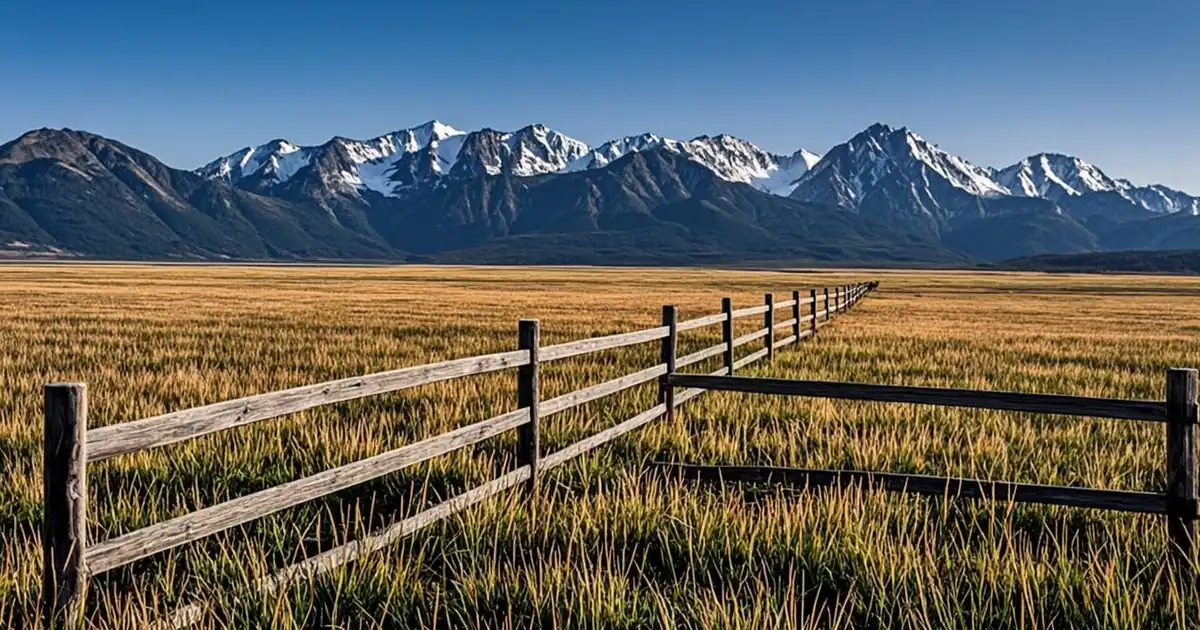
Picture the two most common Billings-area projects. A 6-foot cedar privacy fence around a flat backyard usually needs no building permit at all, just zoning compliance. A 9-foot windbreak fence on the exposed side of the same property needs the full treatment: permit, site plan, and a design that stands up to the wind loads the city spells out on its fences page (Billings fences and retaining walls requirements). Same yard, same weekend, completely different paperwork.
Why Montana Has No Single Statewide Fee
Montana runs building permits through local programs where they exist, and through the state's system where they do not. The state's administrative rules publish the fee calculation used in those jurisdictions: a valuation of $1 to $500 carries a $23.50 fee, and from $501 to $2,000 you pay $23.50 for the first $500 plus $3.05 for each additional $100 or fraction of it (Montana administrative rules, calculation of fees).
Cities with their own building departments publish separate schedules, and those local sheets govern inside city limits. That is why the same fence can carry two different permit prices on opposite sides of a county line. Always price the address, not the region.
Run a quick sample. Declare a fence valuation of $1,400 in a state-system jurisdiction. The first $500 costs $23.50. The remaining $900 rounds to nine increments of $100, so 9 times $3.05 adds $27.45, and the permit math lands at about $51 before local add-ons. Small money, as fence permits should be.
Billings: Permit Triggers and Fee Basics
Billings draws its line at height. A fence that exceeds 7 feet requires a building permit, must be designed for a 105 mph wind load under the adopted codes, and needs a site plan with the application (City of Billings fences and retaining walls requirements). Shorter fences generally need no building permit, though Planning still weighs in on zoning questions such as corner-lot visibility.
The city posts its current building permit fees on its permit fees page, and the total for a tall-fence permit typically follows the valuation math rather than a flat fence fee (City of Billings permit fees). For most residential fence projects that valuation is modest, which keeps the fee modest too.
Why so strict about wind? Open prairie gives a tall fence the same sail area as a small shed, and a fence panel that lets go in a gust becomes a liability on the leeward property. The 105 mph design figure is not bureaucratic decoration; it is the code's way of making sure posts, embedment depth, and bracing match the weather Billings actually gets. Your inspector will look for exactly that when the tall-fence permit is finalized.
Missoula: Issuance Fees and Valuation Math
Missoula County's permit guide lists a $44 residential permit issuance fee for a fence 8 feet or higher, and its fee walkthrough shows how valuation-based building fees stack on top for bigger scopes (Missoula County permit fees). The City of Missoula keeps its own fee schedules page, where plan review is typically collected at application once documents are accepted (City of Missoula fee schedules).
The same county guide walks through a warning worth reading twice: when work starts without the permit, one worked sample shows a $280 base cost plus a $300 penalty, $580 before the fence is legal (Missoula County permit guide, step two). Legalizing after the fact roughly doubles the money in that example, and it costs the calendar even more.
Inside Missoula city limits versus the county matters more than most people guess. The city runs its own fee schedules and its own portal, while the county site serves unincorporated addresses, and the two post different documents for the same kind of fence. Search your address first, then read the matching sheet. Ten minutes of address checking prevents the classic mistake of paying the wrong office and starting over.
Bozeman, Whitefish, and the Smaller Towns
Bozeman's development center publishes building checklists, forms, and its fee schedules, with the newest schedule taking effect August 1, 2026 (Bozeman building checklists, forms, and fee schedules). Growth has been fast enough that the city refreshes fees regularly, so pull the current PDF rather than reusing an old bid figure.
Whitefish keeps a dedicated fence permit form among its applications and fee schedule documents (Whitefish applications, forms, and fee schedule), and Deer Lodge posts its building permit fee schedule through the building inspector's office (Deer Lodge permits and fee schedules). Smaller towns vary the most, and the office phone call remains the fastest way to get today's number.
Smaller towns sometimes skip local programs entirely, which routes your fence through the state's fee table rather than a city hall. That is not a downgrade. The state table is predictable, published, and identical from one town to the next, which makes budgeting easier than calling around. Ask one question at the counter: do you issue building permits locally, or does the state handle it? The answer decides which fee sheet applies to your address.
| Jurisdiction | Permit trigger for fences | Where the fee is published |
|---|---|---|
| Billings | Building permit above 7 feet; 105 mph wind design | Permit fees page and fences page |
| Missoula County | Fence 8 feet or higher | County permit fees site |
| Bozeman | By project scope and valuation | Development center fee schedule PDFs |
| Whitefish | Fence permit form on file | Applications and fee schedule page |
| State system towns | Valuation-based permit required by scope | State administrative rules table |
The Valuation Formula, Line by Line
Valuation-based fees reward small scopes, and a fence permit is usually a small scope. Under the state table, the first $500 of declared valuation costs $23.50, and each additional $100 or fraction adds $3.05 up to $2,000 of valuation (Montana administrative rules, calculation of fees). Local schedules in Billings, Bozeman, and Missoula follow the same general shape: a base amount, then increments as valuation climbs.
For a typical residential fence permit, that math usually lands the total well under the kind of building permit a room addition carries, and comfortably inside the broad $300 to $2,000 building permit band only when the project picks up plan review, trade permits, or unusually tall structural work. Most fences stay far below the top of that range.
A second example, slightly bigger. Declare $2,600 of valuation for a tall fence with engineered posts. The table handles the first $2,000 the same way, and above that your jurisdiction's schedule for larger projects takes over, typically with higher increments. This is where tall-fence permits start to feel like real building permits rather than a formality, and where the engineered wind design from your contractor earns its keep.
When Your Fence Needs No Permit at All
Height decides it in most of Montana. The model-code baseline puts the building permit trigger at 7 feet, and both Billings and Missoula County sit right around that line. A standard backyard fence at 6 feet or lower typically needs no building permit, though front-yard height caps are often stricter and zoning still applies everywhere.
Three checks before you assume you are exempt. First, confirm the height rule for your zone with the city, because front-yard fences are commonly limited lower than rear-yard ones. Second, check setbacks and sight triangles at corners and driveways. Third, if you live under an HOA, its approval runs separately from the city's. The fence permit decision guide (do you need a permit for a fence) and the height explainer (how tall can a fence be without a permit) cover both checks in detail, and the setback guide (fence setback requirements) handles the property-line side.
Front yards deserve their own warning. Many zoning codes cap front-yard fences at heights that surprise homeowners used to backyard rules, sometimes around 42 inches or less near sidewalks and driveways for visibility. The building permit question and the zoning question are separate, and a fence can be exempt from one while violating the other. Read both before ordering panels.
Material rules can surprise too. Barbed wire, electric fence components, and certain chain-link heights carry their own local restrictions in residential zones, independent of whether a building permit is required. Rural addresses get more latitude, but rural is a zoning label, not a distance from town. If your lot sits just outside city limits, confirm which rules actually govern it.
Extra Costs That Sit Next to the Permit
The permit is rarely the whole paperwork bill. Budget for the neighbors of the fee: a property line survey if the boundary is uncertain, a simple site plan drawing for tall-fence applications, and in Billings the engineered wind-load design for fences above 7 feet (Billings tall-fence requirements). Each of these is typically modest, but together they can rival the permit fee itself.
Timing costs money too. Skip the permit and the retrofit path usually includes penalty fees on top of the standard charge, inspection exposure work, and a stalled closing if the house sells mid-problem. Our breakdown of the hidden costs of a fence permit (hidden costs of getting a fence permit) itemizes those surprises line by line, and the state cost comparison (building permit costs by state) shows how Montana stacks up nationally.
Split the survey question honestly. If your fence replaces an old fence on the same line and both neighbors agree where it runs, a new survey may be overkill. If the old fence was built by someone else decades ago, or your deed language is ambiguous, a survey is cheap insurance against rebuilding on someone else's land. Montana counties see plenty of fence disputes, and the permit office will not resolve a boundary question for you.
How to Apply Without Paying Twice
- Measure the finished height at the highest point, not the posts. A 6-foot-11 panel on a sloped yard can cross the local trigger line.
- Sketch a site plan showing the fence line, gates, and distances to property lines before you visit the counter; tall-fence applications in Billings require one (Billings site plan requirement).
- File one permit for the whole fence line. Splitting the project into phases invites two application fees and two inspections for the same fence.
- Declare the honest valuation from your material list and quote. Lowballing risks a recalculation, and padding inflates a fee that is usually percentage-driven.
- Schedule the inspection promptly once posts are set, and keep the approved plans on site for the inspector.
- Ask whether your city wants the application before or after posts are set, because setting posts first can turn a routine filing into a stop-work conversation.
- Keep the permit card handy for the inspector, and photograph the layout before backfilling hides the post footings.
Your Montana Fence Permit Budget Checklist
- Confirm your fence height against the local trigger: above 7 feet in Billings, 8 feet or higher in Missoula County, and the posted threshold elsewhere.
- Pull the current fee sheet from your city or county website, since Montana jurisdictions refresh schedules on their own calendars; smaller offices like Deer Lodge publish theirs through the building inspector's page (Deer Lodge fee schedules).
- If no local program covers your address, price the permit with the state table: $23.50 at the minimum, plus $3.05 for each additional $100 of valuation up to $2,000.
- Add the neighbors of the fee: survey, site plan, and engineered design for very tall fences.
- Check zoning setbacks and any HOA rules separately, because neither is covered by the building permit.
- Set the budget as a range, not a single number: permit minimum at the bottom, site plan and design help at the top, with the true total usually landing in between.
- File once, accurately, and book the inspection early so the fence is finished and legal in the same season.