Table of Contents
- 1The Quick Answer: Fence Rules by Yard Position
- 2Front Yards: The Strictest Fence Rules
- 3Corner Lots and Sight Triangles
- 4Height Rules by Yard Position
- 5Fences and Pool Safety Barriers
- 6Property Lines, Surveys, and the Neighbor Question
- 7Easements: The Setback You Can't See
- 8How to Check Your Fence Rules Before You Build
- 9Quick Answers From Homeowners
- 10How close to the property line can I build a fence?
- 11Can I build a fence right on the property line?
- 12How tall can a fence be in my front yard?
- 13What are the fence rules on a corner lot?
- 14How tall does a fence around a pool need to be?
- 15Do I need a permit to build a fence?
The Quick Answer: Fence Rules by Yard Position
Zoning codes treat each yard of your lot differently, and the fence rules follow the same logic — strictest toward the street, most relaxed toward the back. The table below shows the pattern most codes follow:
| Yard Position | Typical Setback | Typical Height Limit |
|---|---|---|
| Front yard | Often 0–10 ft from front line; some codes push fences back or require open styles | 3–4 ft common |
| Street-side yard (corner lots) | Sight-triangle limits near the intersection | 3–4 ft, lower inside triangles |
| Interior side yard | Usually allowed at or near the line | 6 ft common |
| Rear yard | Usually allowed at or near the line | 6 ft common |
| Pool enclosure | Per pool code — barriers plus gate rules | 48 in minimum around pool |
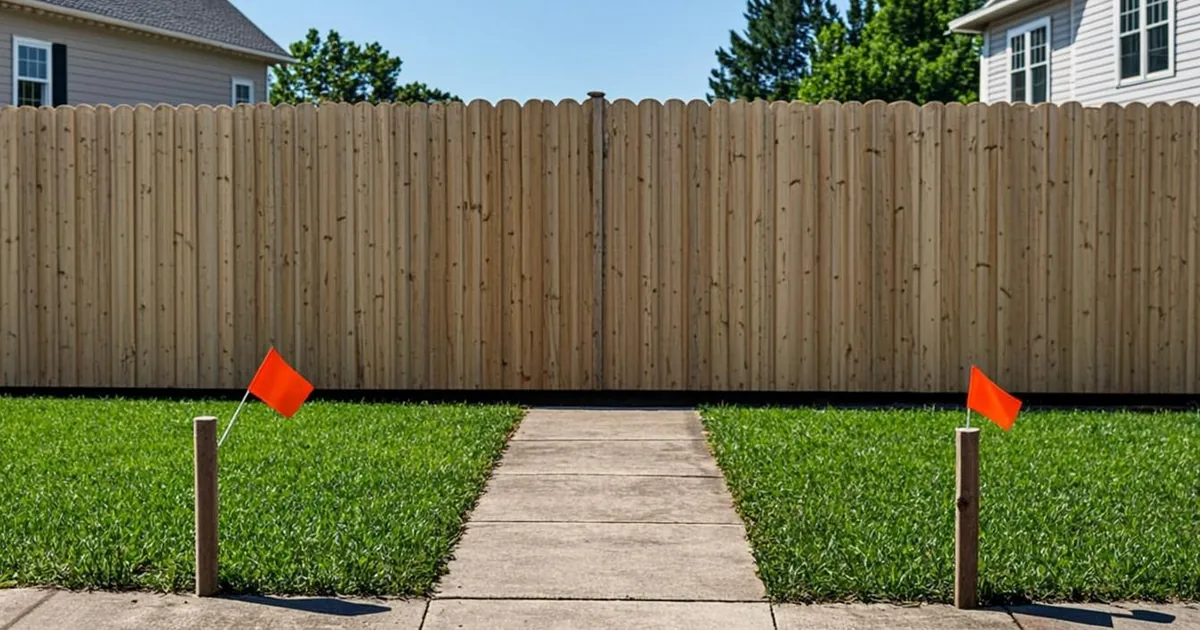
Read the pattern before the numbers: codes use front-yard rules to protect sightlines and streetscape, and rear-yard rules to give privacy where privacy makes sense. That's why the same 6-foot privacy fence can be perfectly legal along your back line and illegal in your front yard.
Front Yards: The Strictest Fence Rules
Front-yard fence rules exist for one reason: drivers, cyclists, and pedestrians need to see across intersections and driveways. Codes enforce that with two levers — height caps and, in some cities, actual setback requirements that push fences away from the street frontage.
Nashville's fence rules show the setback lever in action: solid fences must sit 10 feet back from the street-frontage property line, and within that 10-foot zone a solid fence is limited to 30 inches in height (Metro Nashville, Fence Permits). Open-style fences often get friendlier treatment than solid ones in the same zone, because a picket fence doesn't block a sightline the way a board-on-board one does.
Height caps do the same work elsewhere. Portland limits fence height to three and a half feet where the fence stands in required front building setbacks, while allowing taller fences elsewhere on the lot (Portland PPD, Residential Fences). The common national pattern — 3 to 4 feet in front yards, 6 feet elsewhere — follows the same logic from a different direction.
The practical takeaway: before designing a front-yard fence, find out whether your city regulates the front yard by height, by setback, or by both. The answer changes whether a low fence needs to sit at the sidewalk line or several feet inside it.
Corner Lots and Sight Triangles
Corner lots carry two street frontages, and codes treat the second street-facing yard almost like a front yard — with an extra layer called the sight triangle. A sight triangle is the zone near an intersection where nothing tall may block a driver's view of cross traffic: the triangle stretches along both street lines from the corner, and everything inside it faces the strictest height limits on the property.
Fairfax County, Virginia, publishes the rule plainly: fences in a corner-lot front yard are allowed a maximum height of 48 inches, except inside the sight distance triangle, where the maximum drops to 42 inches (Fairfax County, Sight Distance). Some cities go lower — height limits of 24 to 30 inches inside sight triangles are common where intersections are tight.
Two corner-lot realities follow. First, your fence plan may need to step down in height as it rounds the corner, even though the rest of the run stands at full height. Second, landscaping counts: many sight-triangle rules apply to hedges, shrubs, and berms exactly as they apply to fences, so a compliant fence with a non-compliant hedge row can still generate a violation.
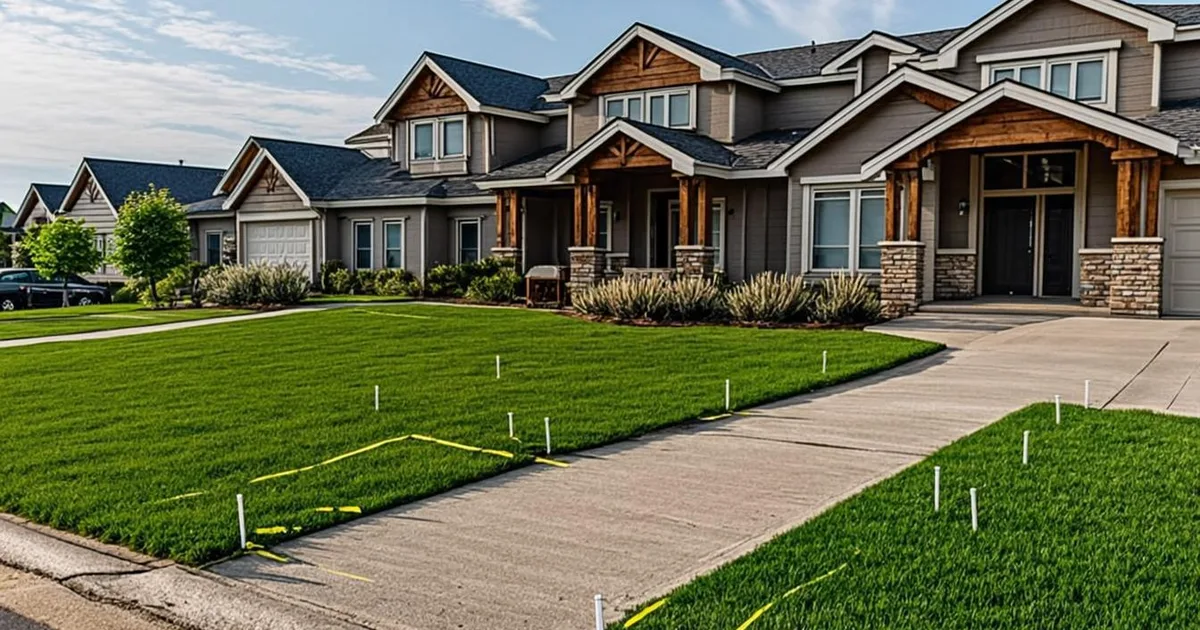
💡 Tip: On corner lots, ask the permit desk to confirm the sight-triangle boundaries for your specific intersection — the dimensions depend on street classifications and speed limits, not just the code section. Mark the triangle corners on the ground with stakes before ordering materials.
Height Rules by Yard Position
Height and setback rules work as a pair, and the 6-foot rear/3-to-4-foot front pattern is the most common shape nationally. But cities add their own arithmetic, and two examples show the range.
Seattle caps fences in neighborhood residential and multifamily zones at 6 feet, with an additional 2 feet allowed for architectural features like lattice or trellis tops (Seattle DCI, Common Code Questions). Portland's permit threshold sits higher — a building permit is needed for wood fences taller than 7 feet or masonry and concrete fences taller than 4 feet (Portland PPD, Fence Permits).
Notice what the Portland example implies: taller fences aren't banned — they're permitted. In many jurisdictions, the fence that exceeds the by-right height limit can still be built with a building permit and sometimes an engineering check for wind load. The height limit tells you where the free-and-clear zone ends, not where construction ends.
Fences and Pool Safety Barriers
Pool fencing follows its own code layer, and it's stricter than any zoning height chart. Under the model residential code's swimming pool provisions, a barrier around a pool must be at least 48 inches above grade, measured on the side facing away from the pool — with detailed rules for gaps, climbability, and gates (IRC, Appendix G, Swimming Pools).
The details that trip up DIY installations: vertical openings in the barrier can't allow a 4-inch sphere to pass; gates must open away from the pool and be self-closing and self-latching, with the latch out of small children's reach; and where the house wall forms part of the barrier, doors and windows facing the pool face extra requirements. Measured from the exterior side matters too — a fence that reads 48 inches from the pool side but sits on a raised deck above the neighbor's grade isn't compliant.
If your yard fence doubles as the pool barrier, design for the stricter code from the start. Pool barrier inspections are dedicated inspections — the inspector isn't glancing at your fence for zoning compliance only, they're testing gate latches and measuring gaps.
Property Lines, Surveys, and the Neighbor Question
Zoning answers where a fence may sit relative to the line. The neighbor question — whose fence is it when it sits on the line — is a different system entirely, and knowing the difference prevents most fence fights.
The zoning rule is simpler than people expect: within setback limits, you can generally build a fence anywhere on your own property, including directly on the boundary line. Seattle's guidance states it without hedging — you can build a fence anywhere on your property, with height limits doing the regulating (Seattle DCI). A line fence legally touching the boundary isn't an encroachment.
But building on the line creates practical entanglements. A shared-boundary fence means maintenance obligations may be shared under state law or local ordinance, both owners' contractors may need access to build it, and both owners' lots carry it for zoning purposes. Some states have specific fence statutes governing agricultural boundary fences and cost-sharing; most residential disputes, though, run on neighborly agreements rather than statutes.
Which leads to the one rule that has no exception: build the fence to a verified line, not an assumed one. Fences installed to an old fence line, a hedge row, or a neighbor's guess are how encroachments happen — and an encroaching fence can be forced over, or its removal ordered, after the discovery. A boundary survey costs a fraction of a moved fence, and if the existing fence and the legal line disagree, that's exactly the finding you want before construction, not after.
Easements: The Setback You Can't See
Utility easements deserve special attention on fence projects because fences are the structure most often built straight into them. A fence across a utility or drainage easement is a structure the easement holder can remove — or require you to remove — to access their corridor, typically without compensating you for the fence.
The standard practice: pull your recorded plat or title report before siting the fence, note every easement strip, and either keep the fence out or plan for a gate or removable section where access is expected. Water districts, electric utilities, and drainage authorities all handle this differently, but all of them treat the easement as theirs when access is needed. Fence panels across a backyard easement corridor are a common and accepted design; concrete-footed steel posts in a sewer easement are not.
⚠️ Warning: A fence inside a recorded easement can be cut or removed by the utility without compensation, and your permit compliance doesn't protect it — the easement is a property right, not a zoning rule. Check the plat before the post-hole digger comes out.
How to Check Your Fence Rules Before You Build
- Step 1 — Identify your zone and yard types. Your city or county zoning map gives the district; the fence section of the code gives the rules per yard. Search "[your city] fence regulations residential."
- Step 2 — Note the four numbers. Front-yard height, side/rear height, any front or corner setback requirement, and the permit threshold (height or cost). Corner lots add the sight-triangle numbers.
- Step 3 — Pull the plat and find easements. Mark every recorded easement against the planned fence line. Adjust for gates or rerouting before you order posts.
- Step 4 — Verify the line. Locate pins from the original survey or hire a surveyor if the line is uncertain or the neighbor relationship is fragile. This is the step that prevents the dispute, not the permit.
- Step 5 — Apply if required. Fence permits are the fastest tier in most departments — often a same-week approval with a site sketch. Our guide to how long the fence permit process takes sets the expectation, and the fee side is usually modest — see our breakdown of what fence and other permits cost.
✅ Key takeaway: Fences follow the opposite pattern of houses: strictest at the street, freest at the back line. Lock down four numbers — front height, rear height, corner sight triangle, pool barrier — verify the actual property line, and keep the fence out of recorded easements. Do that and the fence project stays a weekend, not a dispute.
Quick Answers From Homeowners
How close to the property line can I build a fence?
In most cities, side and rear yard fences may sit on or within inches of the property line — the height limit does the regulating, not a setback. Front yards and street-side yards are different: some codes push fences back from the frontage or cap their height near the street. Your municipal fence section defines the distance for each yard of your specific lot.
Can I build a fence right on the property line?
Generally yes, if setbacks allow it — a fence on the boundary is not an encroachment because it hasn't crossed the line. Practical matters follow: boundary fences can create shared maintenance obligations, and both owners typically need access for construction. Build to a surveyed line, not an assumed one, and put any cost-sharing agreement in writing with the neighbor.
How tall can a fence be in my front yard?
Three to four feet is the common cap for front-yard fences, with some cities allowing slightly taller open styles like picket or wrought iron. The limit protects sightlines for drivers and pedestrians. Solid front-yard fences face additional restrictions in some cities — Nashville's rules, for example, push solid fences back 10 feet from the street-frontage line.
What are the fence rules on a corner lot?
Corner lots carry front-yard rules along both street frontages, plus a sight triangle near the intersection where height limits drop even lower — Fairfax County caps corner-lot front-yard fences at 48 inches and 42 inches inside the sight triangle. Expect your fence height to step down as it approaches the corner. Landscaping inside the triangle usually faces the same limits.
How tall does a fence around a pool need to be?
At least 48 inches above grade, measured on the side away from the pool, under the model residential code's pool barrier provisions — with gate rules (self-closing, self-latching, opening away from the pool), limits on vertical gaps, and extra requirements where the house forms part of the barrier. Local amendments sometimes raise the minimum, and barrier inspections are their own permit milestone.
Do I need a permit to build a fence?
It depends on height and material: many jurisdictions exempt fences up to about 6 or 7 feet from building permits, while taller wood fences and masonry walls typically need one — Portland requires a permit for wood fences over 7 feet and masonry over 4 feet, for example. Zoning compliance applies regardless of the permit exemption, and pool-adjacent fences need barrier permits in most places.
Our guide to whether your fence needs a building permit covers the full decision, including what's at stake if you skip it — the same enforcement path described in what happens if you build without a permit.