Window replacement is the most common full-service remodeling project in America, and it produces more contradictory permit advice than any other — because the honest answer genuinely is "it depends where you live." One city exempts like-for-like swaps outright; the next town over permits every window that leaves its frame.
The short answer: replacing a window with the same size and type of unit is permit-exempt in many cities — Chicago and San Diego both spell out the exemption — but a significant number of jurisdictions require a permit for any window replacement, including like-for-like swaps, and permits are universally required when you enlarge or move an opening, when a bedroom window stops meeting egress dimensions, or when the work touches required safety glazing. The only reliable answer starts with your city's permit-exemption list.
Here's how the rules actually work, what triggers a permit everywhere, and the two code requirements — egress and safety glass — that decide the answer more often than the permit desk does.
Table of Contents
- 1Quick Answer: Window Projects and Permits
- 2Why the Rules Vary This Much
- 3The Like-for-Like Exemption, Where It Exists
- 4When Cities Require the Permit Anyway
- 5The Egress Rule That Overrides Everything
- 6Safety Glazing: The Locations That Need Tempered Glass
- 7Full-Frame vs. Insert: Does the Method Change the Answer?
- 8Enlarging the Opening: A Different Project Entirely
- 9HOA and Historic Layers
- 10When a Permit Is Required: Process and Cost
- 11Before the Crew Arrives: The Checklist
- 12Frequently Asked Questions
- 13Do I need a permit to replace windows in the same opening?
- 14When is a window permit always required?
- 15Does my replacement bedroom window have to meet egress rules?
- 16Do my new windows need tempered glass?
- 17How much does a window replacement permit cost?
- 18Do I need HOA approval to replace windows if the city says no permit?
Quick Answer: Window Projects and Permits
| Project | Typical Permit Treatment |
|---|---|
| Same-size, same-type replacement in an existing opening | Exempt in many cities; required in some — check locally |
| Sash or glass-only repair | Exempt nearly everywhere (a repair, not a replacement) |
| Enlarging, shrinking, or moving the opening | Permit required — structural work on the wall |
| New window where none exists | Permit required |
| Bedroom window replacement (egress) | Watch the egress dimensions — see below |
| Windows in doors, near pools, stair landings | Safety glazing rules apply regardless of permits |
Why the Rules Vary This Much
The model residential code's permit-exemption list doesn't mention window replacement at all — it exempts cosmetic work like painting, wallpaper, and minor repairs. That silence leaves every city to draw its own line, and the lines reflect local priorities: hurricane coasts care about wind-rated installations, older cities care about envelope work on aging structures, and high-volume building departments care about inspection workload.
The result is a patchwork that frustrates national window companies and surprises homeowners who quote their last house's rules at their current permit desk. Two cities with identical housing stock can sit one mile apart with opposite requirements — which is why the national "usually no permit" advice is true, useless, and occasionally expensive, in that order.
The Like-for-Like Exemption, Where It Exists
The most common exemption pattern treats window replacement as maintenance when nothing about the opening changes. Chicago's building-permit FAQ states it plainly: no building permit is required to repair an existing window or replace glass — the like-for-like swap stays outside the permit system while structural changes stay inside.
San Diego formalizes the same idea through its no-plan permit pathway: replacement of doors and windows is handled without plans when the new units are the same size and type as the existing ones, with no changes to the opening. Note the structure of that sentence — same size and type, no opening changes. A wood sash swapped for vinyl in the same opening may pass in one city and fail in another, because "type" is where jurisdictions part ways.
When Cities Require the Permit Anyway
The counter-pattern is just as real. Santa Ana, California answers the question flatly: all window replacements on existing structures require a building permit. The reasoning varies by place. Wind-borne debris regions along the Gulf and Atlantic coasts review window installations for impact rating and anchorage, because a failed window is how hurricanes pressurize and peel houses. Cities with older housing stock watch for lead paint disturbance and structural surprises in balloon-framed walls. And some departments simply want the inspection record — a permitted, inspected window installation is verifiable at resale in a way a receipt is not.
⚠️ Warning: Don't take the exemption for granted because the window store didn't mention one. Retailers quote rules across hundreds of jurisdictions and are not the permit authority. One call to your building department — "do you require a permit for like-for-like window replacement?" — is the entire due diligence.
The Egress Rule That Overrides Everything
Whatever the permit answer is, one code requirement shapes bedroom window replacement everywhere the residential code is adopted: Section R310.1 requires every sleeping room to have an emergency escape and rescue opening with minimum dimensions — at least 5.7 square feet of net clear opening (5.0 at ground floor), at least 24 inches of opening height, at least 20 inches of width, and a sill no higher than 44 inches above the floor.
The trap is arithmetic: replacement windows are sized by their glass, and a modern low-e unit can have a thicker frame, a smaller net opening, and a higher sill than the 1980s unit it replaces — taking a compliant bedroom window out of egress compliance without anyone noticing. Inspectors notice in cities that permit the work; appraisers and home inspectors notice everywhere else. When you replace a bedroom window, ask the supplier for the unit's net clear opening figure and check it against the four numbers above before ordering. If the old window already failed egress, the replacement is your one cheap chance to fix it — and in permit jurisdictions, the plan review exists precisely to catch this.
Safety Glazing: The Locations That Need Tempered Glass
The second code requirement follows the glass itself. Section R308.4 lists the hazardous locations where safety glazing — tempered or laminated — is required: glazing in doors, alongside doors within a defined zone, windows close to stairways and landings, near the bottom of stair runs, and walls enclosing pools and spas where the sill sits close to the water. A replacement window in any of those locations must arrive with safety glazing, and in permit jurisdictions the field inspection checks the etched logo in the glass corner.
This rule outranks the permit question entirely — an exempt, no-permit window swap in a door-adjacent location still must be safety-glazed if the original was, and the cost difference is material. Bathroom windows inside tub and shower surrounds follow the same logic; the wet-location glazing rules and the other bathroom-specific triggers are covered in whether a bathroom remodel needs a permit.
Full-Frame vs. Insert: Does the Method Change the Answer?
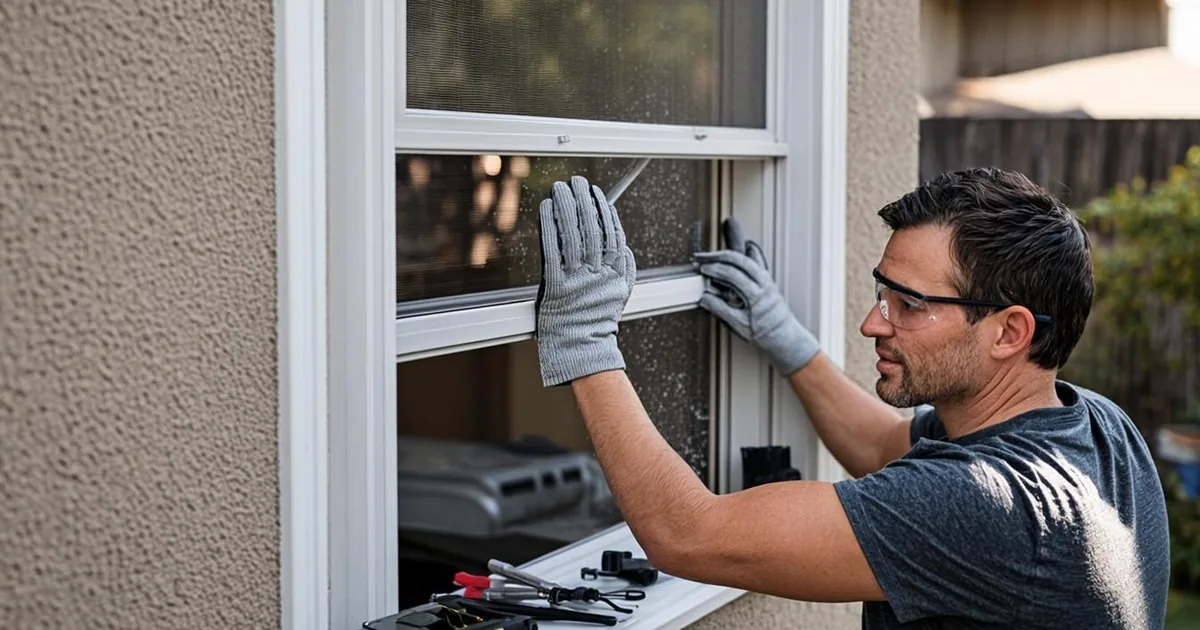
Window sales literature splits replacements into two methods, and the permit rules follow the split loosely. An insert replacement — a new window set inside the existing frame — changes nothing structural and usually reads as maintenance. A full-frame replacement tears out the old frame down to the rough opening, which touches the weather barrier, the flashing layers, and occasionally the framing itself. Jurisdictions that exempt inserts sometimes still require permits for full-frame work, precisely because the envelope is opened and water management becomes inspectable — or at least inspectable-in-principle.
The distinction blurs in practice: many departments treat both methods identically because the opening stays put either way. But where your city draws the line at full-frame, the contractor's quote matters — the same window count can be quoted as insert by one installer and full-frame by another, with different permit consequences attached. Ask which method the quote prices, then match it against the exemption language you got from the permit desk. The combination answers the question for your actual project rather than the average one.
Enlarging the Opening: A Different Project Entirely
Cutting a wider or taller opening, adding a window where a wall was, or converting a window to a door changes the structure of the wall — headers, load paths, and in some cases foundations. Every jurisdiction permits that work, and the review looks at the header sizing and the load transfer, not the glass. Budget accordingly: a structural window project carries plan review, framing inspection, and fees closer to a small remodel than a window swap, and the timeline runs through standard plan review rather than over-the-counter issuance. The schedule mechanics are the same ones covered in how long a building permit takes.
HOA and Historic Layers
Exemption from a city permit is not exemption from private rules. Associations commonly regulate visible window changes — frame color, muntin patterns, interior blind colors facing the street — through their design standards, and the approval mechanics are the same as any exterior change, covered in how HOA rules affect building permits. Historic districts add a public layer: window replacement on contributing structures can require review by a preservation commission even where the building department exempts the work, and the approved materials lists are narrower than retail catalogs.
When a Permit Is Required: Process and Cost
Where replacement needs a permit, it's usually a light one — a simple application listing window count, sizes, and locations, sometimes over-the-counter, often as part of a "no-plan" or residential-minimal category like San Diego's. Fees typically land in the range typical of small residential permits; the pattern of fees across states is covered in residential building permit fees. Inspection, where required, is a single visit checking anchorage, flashing, and the safety-glazing marks — and it's also the inspection that certifies the work for future buyers.
Before the Crew Arrives: The Checklist
- Call your building department with one question: is like-for-like window replacement permit-exempt here?
- Check bedroom windows against egress dimensions — net clear opening, height, width, sill height — before ordering units.
- Identify safety-glazing locations (doors, stairs, pools, tubs) and order tempered or laminated units there.
- Keep all openings the same size and position unless you're ready for structural permits.
- Check the HOA book and any historic status for visible elevations.
- Keep the stickers. Labels and etched marks are what inspectors and future appraisers read.
Window projects sit at the gentle end of the permit spectrum almost everywhere — but the two code rules that ride along with them, egress and safety glazing, are the difference between a straightforward upgrade and a problem that surfaces at inspection or resale. Answer those two questions and the permit question, and the project stays what it should be: a one-week upgrade, not a code case study. For the other side of the coin — what the enforcement path looks like when window work, or any work, skips a required permit — see what happens if you build without a permit.
Frequently Asked Questions
Do I need a permit to replace windows in the same opening?
It depends on your city. Many jurisdictions exempt like-for-like replacement — Chicago exempts window repair and glass replacement, and San Diego handles same-size, same-type swaps through a no-plan pathway. Others, like Santa Ana, require a permit for all window replacements. The only reliable answer comes from your own building department's exemption list.
When is a window permit always required?
When the opening changes — enlarging, shrinking, or moving it — because that's structural work on the wall. Permits are also universal for new window openings and, in many coastal wind-borne regions, for any window installation because anchorage and impact ratings get reviewed. A few cities simply permit all replacements to keep an inspection record.
Does my replacement bedroom window have to meet egress rules?
Yes. Sleeping rooms need an emergency escape opening with at least 5.7 square feet of net clear opening (5.0 at ground floor), a minimum 24-inch opening height, 20-inch width, and a sill no more than 44 inches above the floor. Modern replacement frames are thicker than old ones, so the net opening can shrink below code — check the manufacturer's net clear opening figure before ordering.
Do my new windows need tempered glass?
In hazardous locations, yes — regardless of whether the project needs a permit. Safety glazing is required in and beside doors, near stairways and landings, at the bottom of stair runs, and around pools, spas, and tub or shower enclosures. Tempered units carry an etched logo in the corner; inspectors look for it and future appraisers do too.
How much does a window replacement permit cost?
In cities that require one, window permits are among the cheapest residential permits — often a flat fee in the $50 to $200 range or a minimal valuation-based charge, sometimes issued over the counter with a single inspection. Check your city's fee schedule for the exact number; national cost patterns are covered in state-by-state permit fee guides.
Do I need HOA approval to replace windows if the city says no permit?
Very possibly. HOA design standards commonly regulate visible window changes — frame color, grid patterns, and sometimes interior blind colors facing the street. The architectural approval is independent of the city permit, so submit the window spec to your architectural committee even when the building department exempts the work.