📌 Quick facts: A shallow yard drain that soaks into your own lawn often needs no permit, while a French drain that ties into a sewer, crosses a property line, or sends water toward a street usually does. Rules vary widely by city and county. Expect $300 to $2,000 for most permits of this type, equal to 0.5% to 2% of project value under October 2026 fee schedules.

Table of Contents
- 1Do You Need a Permit for a French Drain?
- 2Why French Drains Sit in a Gray Zone
- 3When a Plumbing Permit Usually Applies
- 4Grading, Stormwater and Your Neighbors
- 5Cases That Often Stay Exempt
- 6Easements, Property Lines and Utility Locates
- 7What a Drainage Permit Typically Costs
- 8How to Confirm the Rules Where You Live
- 9If You Skip the Permit Anyway
- 10A Pre-Dig Checklist
Do You Need a Permit for a French Drain?
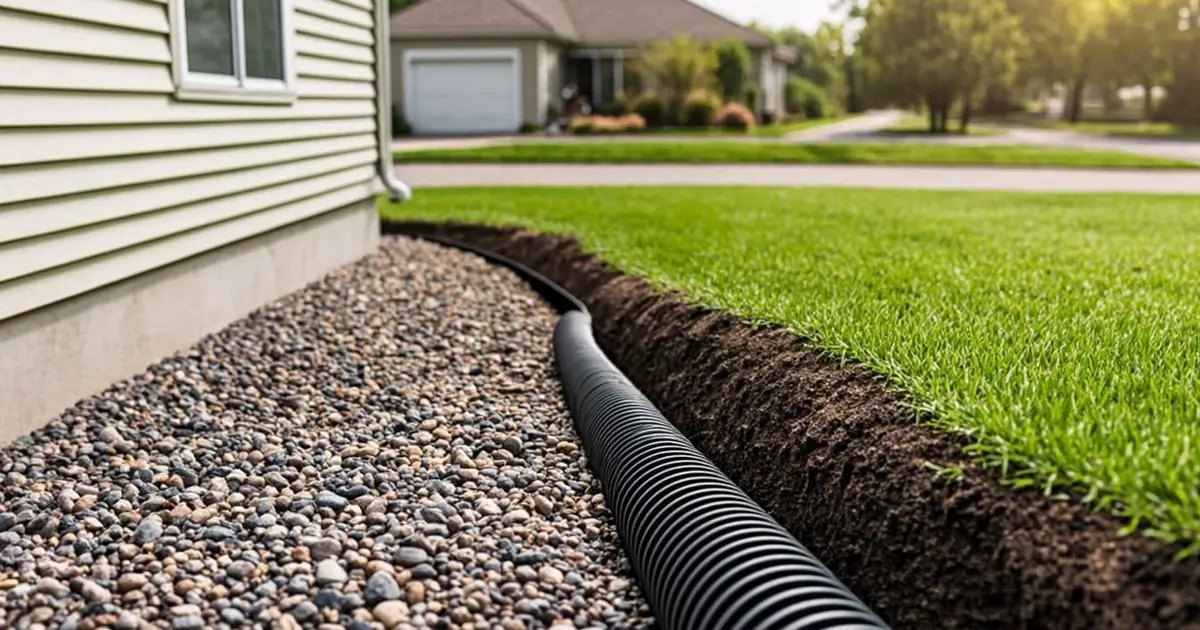
Sometimes, and the deciding factor is where the water ends up. Homeowners asking "do I need a permit for a French drain" usually discover the answer splits into three cases. A shallow trench with gravel and perforated pipe that discharges into your own garden bed often needs no permit at all. A drain that connects to the sewer or the municipal storm system almost always does. And a system that reshapes grading or pushes runoff toward a neighbor or the street lands somewhere in between, where drainage and grading rules take over.
That split surprises people because a French drain looks like landscaping. It is a ditch, some fabric, a pipe, and gravel. Yet the moment the pipe touches public infrastructure, or the trench changes how water leaves your lot, your city has a stake in the design. Wet basements and flooded yards make drainage one of the most common DIY projects in wet climates, and it is also one of the most commonly botched, which is exactly why some departments watch it.
Here is the sequence this article follows. First, why drains sit in a regulatory gray zone. Then each trigger: plumbing connections, grading and stormwater, and the exempt cases. After that, easements, utility locates, costs, and how to confirm your city's rules in one phone call.
Why French Drains Sit in a Gray Zone
Three different rulebooks can claim a drainage trench, and your project may touch all three. Plumbing codes govern piping that connects to drains, sewers, and vents. Grading and stormwater ordinances govern how water moves across lots and into public systems. Zoning governs where you can dig, especially near property lines, easements, and protected areas. Which rulebook wins depends on the outlet and the depth, not the brand of pipe you bought.
The model codes give the frame. The IRC's permit chapter lists exempt work, and simple site drainage usually does not appear among the permit-triggering items, but plumbing work generally does. Local amendments fill the gaps, and states adopt the model codes on different schedules, which you can trace with the ICC's adoption maps. The result is genuine patchwork: two neighboring towns can treat the identical backyard drain differently.
Because the answer is local, treat every general rule in this article as a starting hypothesis. The final word belongs to your building or public works department, and getting it costs one phone call.
When a Plumbing Permit Usually Applies
Connect your French drain to anything municipal and you are in plumbing territory. Tying into the sanitary sewer, joining a storm drain line, or routing yard water into your home's existing drain-waste-vent piping typically requires a plumbing permit and an inspection, because those connections can admit sewage gases, back up during storms, and overload pipes that were never sized for runoff. Departments care about the joint, the slope, and the backflow protection, all of which hide underground after backfill day.
Cities publish their expectations in plain language. Portland's residential plumbing permits page explains which drainage work needs a permit and how homeowners file, and San Diego's plumbing permit page covers similar ground for Southern California. Read one of these before talking to a contractor, and you will recognize every term on the bid sheet.
A practical pattern to remember. Repairs to existing drainage lines often get lighter treatment than new connections, and some codes explicitly exempt clearing stoppages or fixing leaks while requiring permits for new piping. Our guide to permits for plumbing changes breaks down that repair-versus-replacement line in detail.
Grading, Stormwater and Your Neighbors
The second trigger is water that leaves your lot differently than before. Many municipal codes make it an offense to redirect runoff onto neighboring property or into the street, and some treat significant regrading as work that needs a grading or stormwater permit on its own. A French drain is a water-routing machine. If your outlet sends a roof's worth of storm water across the property line, you have built a liability trench with landscaping around it.
Departments angle toward the same outcomes: keep water on your lot, slow it down, and discharge it where the ground can absorb it. Pop-up emitters into a planted bed, dry wells sized for the roof area, and rain gardens all tend to win approvals. Counties with steep slopes or heavy rain add their own layers; Douglas County, Oregon's "does my project need a permit" page is a good example of how a county spells out when grading and drainage work needs review.
Neighborhood context matters too. If your lot sits in a floodplain, near a wetland, or inside a drainage easement, expect extra review regardless of depth. Our guide to wetland setbacks explains the buffer zones that can stop a trench plan entirely.
Cases That Often Stay Exempt
Plenty of French drain projects never see a permit form. A hand-dug trench along a foundation that drains by gravity into a gravel bed or a garden area usually counts as routine site drainage, especially when it stays shallow and does not touch utilities or public systems. Swales, splash blocks, and downspout extensions fall into the same bucket. Some cities list these exemptions explicitly; Tucson's permit exemptions page shows how a department spells out what needs no permit at all.
Exempt still means three things. First, exempt from the permit, not from the plumbing code's logic; slope and discharge location still decide whether the drain works. Second, exempt does not survive a scope change; add a sump pump, a tie-in, or a deeper excavation and the exemption evaporates. Third, private rules still apply. An HOA can require approval for visible trenching and restored lawn, and a historic district may care about disturbance to old foundations. Our guide to HOA rules for exterior renovations covers that layer.
Easements, Property Lines and Utility Locates
Two property issues sink more drain projects than any permit desk. The first is the easement. Utility easements run along many side and rear lot lines, and digging in them can expose you to removal of your work without compensation if the utility ever needs the corridor. Read your plat map before you route a trench; our walkthrough of easement and setback rules shows how to find and read one. Setback rules can also govern how close a structure or pipe vault may sit to the line, even for underground work.
The second issue is the line itself. A drain that captures water on your side of the boundary is your business. A drain that discharges on the neighbor's side is a dispute with a shovel in it, and courts generally frown on engineered runoff. If the natural fall of your yard makes the property line tempting, talk to the neighbor first and get any agreement in writing. Our guide on getting a property line survey helps when the boundary itself is uncertain.
Before any digging, call 811, the national utility-locate service, typically a few business days before excavation. It is free, it is usually required by state law, and hitting a gas or fiber line turns a weekend project into a very expensive story.
What a Drainage Permit Typically Costs
For projects that do need one, most building departments price simple residential permits in the $300-$2,000 band (about 0.5% to 2% of what the project is worth), with straightforward site-work reviews usually at the lower end of that range. Costs rise when engineering reviews enter the picture, such as connections to municipal systems, work in easements or flood zones, or plans that need a licensed designer's stamp.
Two cost notes worth remembering. Trades bundled with the dig, like a sump pump circuit, can carry their own electrical permit. And after-the-fact permits, the kind you pursue when a neighbor complains first, generally cost more than filing up front, because the department reviews work it cannot see. Our guide to building permit costs by state puts the range in context.
How to Confirm the Rules Where You Live
One call settles it, if you ask the right questions. Call your building or public works department and say the scope in one sentence: "I want to install a gravel-and-perforated-pipe drain along my foundation, about knee deep, discharging into a bed in my rear yard." Then ask four things: whether any permit applies to that scope, whether the outlet plan is acceptable, whether your parcel sits in a drainage or floodplain overlay, and whether a separate grading review is triggered by depth or disturbed area. Write down the name and date of whoever answers.
If your drain will connect to anything municipal, expect to submit a simple drawing showing the route, depth, slope, and the connection point, then schedule an inspection before backfill. That open-trench inspection is the whole reason the permit exists, and it is also your cheapest insurance against a connection that backs up during the first big storm.
If You Skip the Permit Anyway
What actually happens when a drain goes in unpermitted? Usually nothing, until something. The something is often a neighbor's flooded yard, a blocked municipal line, or a home sale where the buyer's inspector flags the work. At that point the city can require you to expose the pipe for inspection, obtain an after-the-fact permit, or remove the drain entirely, and some departments add violation fees on top. Seattle's unpermitted-work explainer describes the standard sequence: stop-work, fees, legalization. For the full fallout — insurance and resale included — read what happens if you build without a permit, step by step.
Unpermitted drainage has a specific resale sting. Buyers' inspectors spot discharge stains, and unpermitted work near sewer connections raises questions no seller enjoys answering. The permit receipt is worth more later than it costs today.
A Pre-Dig Checklist
- Map the outlet first: your own planting bed, a dry well, a municipal system, or a street, because the outlet decides the permit.
- Call 811 and wait the full locate period before any shovel touches soil.
- Check your plat map for easements and keep the trench out of them where possible.
- Confirm your parcel is not in a floodplain, wetland buffer, or drainage overlay.
- Check HOA covenants for excavation and lawn-restoration rules.
- If the plan ties into municipal piping, ask the department which plumbing permit form and inspection stages apply.
- Photograph the open trench and keep the permit card with the receipt; both help at resale.
Run that list and you will know, with confidence, whether your French drain is a Saturday project or a permitted one. The water always finds the low spot. The paperwork should never be the thing that finds you first.