Portable buildings occupy a strange corner of the permit world: the shed dealer says "no permit needed," the neighbor's unpermitted cabin suggests the same, and yet the code enforcement officer's truck outside somebody's driveway tells a different story. Both sides are partly right, and the difference is in what "portable" legally means — which is almost nothing.
The short answer: portable buildings follow the same permit exemption as any other small detached structure — one story, detached, under 200 square feet in most codes — but "portable" is not a legal exemption by itself. A skid-mounted building still counts as an accessory structure for zoning, a building delivered on a truck still needs to meet setbacks and easements, moving it down a highway needs an oversize permit, and anything with plumbing, electrical, or habitation plans leaves exemption territory immediately.
Here's the full picture: what's genuinely exempt, what only sounds exempt, and the special cases — construction trailers, tiny homes, moving permits — where the rules surprise people most.
Table of Contents
- 1Quick Answer: Portable Building Types and Permit Treatment
- 2The 200-Square-Foot Exemption Covers Portable Buildings
- 3"Portable" Is Not a Legal Category
- 4Moving Permits: The Rule Nobody Expects
- 5Construction and Office Trailers
- 6Tiny Homes on Wheels: The Border Case
- 7Storage Containers: The Other Portable Building
- 8How Much the Exemption Line Moves Around the Country
- 9Rules That Still Apply When the Permit Doesn't
- 10Before Delivery Day: The Checklist
- 11Frequently Asked Questions
- 12Do I need a permit for a portable building?
- 13Does putting a building on skids exempt it from permits?
- 14How big can a portable building be without a permit?
- 15Do I need a permit for a construction storage trailer on my property?
- 16What permits apply when moving a portable building down the road?
- 17Is a tiny home on wheels treated like a portable building?
Quick Answer: Portable Building Types and Permit Treatment
| Building Type | Typical Permit Treatment |
|---|---|
| Skid-mounted storage shed, under 200 sq ft, no utilities | Building-permit exempt in most jurisdictions |
| Larger portable barn or cabin, over 200 sq ft | Building permit required; treated like any accessory building |
| Portable building with electrical or plumbing | Trade permit required; structure often reviewed too |
| Construction office or storage trailer | Temporary permit tied to an active construction permit |
| Tiny home on wheels | Usually NOT a building — treated as a vehicle/RV; placement rules apply |
| Delivery move on public roads | Oversize/single-trip permit when the load exceeds size limits |
The 200-Square-Foot Exemption Covers Portable Buildings
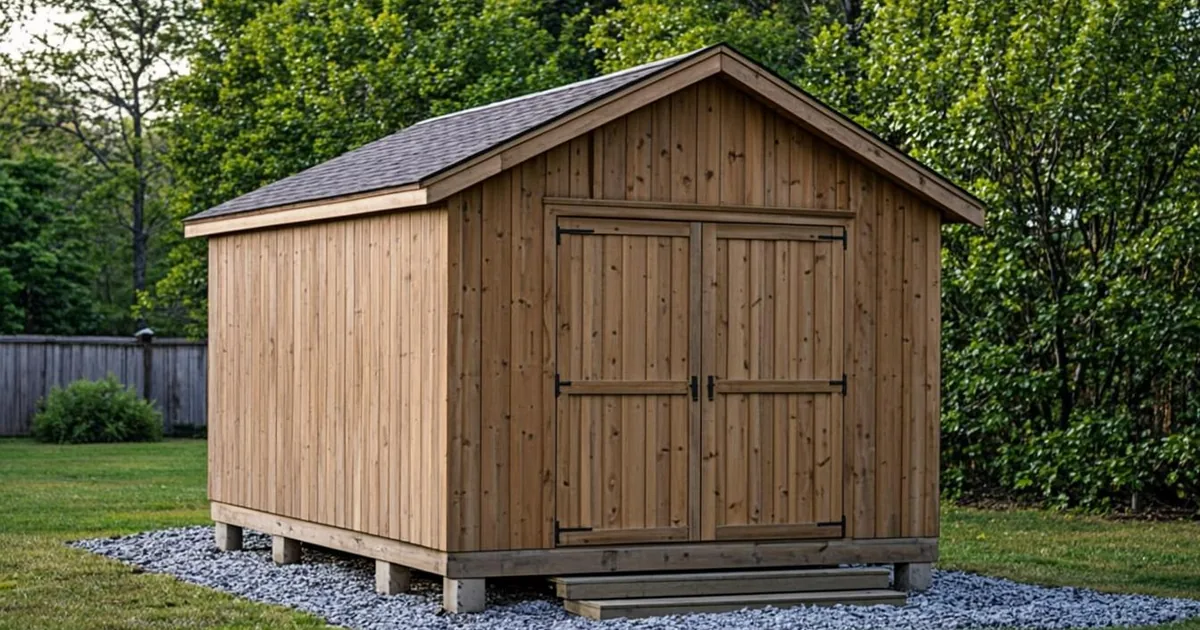
The exemption portable-building dealers refer to is real — it just isn't about portability. The model residential code exempts one-story detached accessory structures up to 200 square feet from building permits, and local codes adopt that line with their own twists. Mohave County, Arizona's work-exempt list names tool and storage sheds, playhouses, and similar uses up to the threshold — language that covers a skid-mounted shed as comfortably as a site-built one.
Austin shows how the same exemption reads in a big city: one-story detached accessory structures no more than 200 square feet need no building permit, and the city appends the sentence that matters most — exempt work must still comply with building codes and zoning. For portable buildings, that sentence does all the heavy lifting in this guide.
✅ Key takeaway: The exemption is about size and use, not wheels or skids. A 160-square-foot portable shed is exempt for the same reason a 160-square-foot site-built shed is — and neither is exempt from placement rules.
"Portable" Is Not a Legal Category
The costliest misconception in this niche: that a building on skids sits outside the law's reach. Zoning codes define accessory structures by location and use, and a skid building parked on your lot for a month has taken a position on the lot — which means setbacks, easements, lot coverage, and sometimes design standards all apply. Cities handle the "temporary" argument differently; some codes set a genuine time threshold (a certain number of days before a portable structure counts as permanent), but the thresholds are short and rarely match how long the building actually stays.
Enforcement follows the same path as any unpermitted structure: a complaint or a drive-by triggers a check, the inspector measures footprint and placement, and the questions start with size and location rather than whether the floor is wood or concrete. The consequences — violation notices, after-the-fact permits, removal orders — are the standard machinery described in what happens if you build without a permit, and portable buildings get no discount for being movable.
Moving Permits: The Rule Nobody Expects
The one permit that genuinely attaches to portability is the highway permit. A building hauled down a public road is a load, and loads bigger than legal dimensions need state oversize permits. Texas — the epicenter of the portable barn industry — issues single-trip permits for portable buildings when the vehicle and load stay within 14 feet high and 80 feet long, with escort and route rules beyond that. That's the dealer's problem, not the buyer's — until the buyer arranges their own move between properties, which happens more often than you'd think with cabins and larger sheds. If you're hiring the move yourself, the oversize permit conversation belongs in the quote.
Construction and Office Trailers
Job-site trailers are the most regulated portable buildings in America, and the rules are clean: they're permitted temporarily, tied to an active project. Maricopa County allows construction storage and office trailers in any zoning district when they relate to a valid permit issued for construction on the site — the trailer's permission literally rides on the building permit's existence. The pattern generalizes: a trailer on a site with no active permit is a code violation, and the temporary permit expires when the project does. Homeowner-builders living through a rebuild should expect to add the trailer to their permit set and remove it before final inspection.
Tiny Homes on Wheels: The Border Case
A tiny home on wheels (THOW) sits in a different legal universe from a portable building: with wheels, a trailer frame, and often RV certification, it's typically regulated as a vehicle rather than a building — which means no building permit for the structure, but a completely different rulebook for where it may park, how long it may be occupied, and whether it can serve as a dwelling. Cities restrict THOW placement through RV ordinances, zoning definitions of "dwelling," and ADU programs that admit certified units.
The border matters because owners blur it: skirt the THOW, tie it to a septic line, build a deck to its door, and it starts behaving like a permanent dwelling in every way the code cares about — at which point the exemption-that-never-was evaporates. Anyone considering a THOW as housing should ask the local planning department two questions: is it allowed as a dwelling on my lot, and what certifications does it need. The answers vary more between neighboring cities than the building code ever varies.
Storage Containers: The Other Portable Building
Shipping containers and drop-box style storage units deserve their own paragraph, because they're the portable buildings cities regulate most aggressively. A container that arrives by truck and stays for a construction project usually rides on the building permit like a job-site trailer. A container that stays as permanent storage converts into an accessory structure in most codes — sometimes explicitly, with sections written for "cargo containers" that restrict them to certain zones, require screening, or ban them outright in residential districts. The delivery-franchise model (a container dropped at your driveway for a month of decluttering) occupies a gray zone that some cities explicitly permit for a fixed number of days. The pattern to remember: the same box is exempt, temporary-permitted, or banned depending entirely on how long it stays and what your local code says about containers as a category — a question worth asking before the truck is scheduled, not after.
How Much the Exemption Line Moves Around the Country
The 200-square-foot figure is the model-code baseline, but the local map has texture worth knowing before you shop for a building. Some cities drop the threshold to 120 square feet for accessory structures, which shrugs a 10x12 shed out of exemption territory. Others keep 200 square feet but add conditions — anchoring standards in high-wind zones, floodplain exclusions like Austin's, or height caps that bite tall-loft barns before the footprint does. County jurisdictions tend to run closer to the model code verbatim, which is why the same 12x20 portable cabin can be permit-free on one side of a county line and permit-required on the other.
The practical method beats the map: read your jurisdiction's "work exempt from permit" page — nearly every building department publishes one — and note three numbers: the square-footage line, the height cap, and any use exclusions. Those three numbers answer 90 percent of portable-building questions for your address, and the page's citation of the adopted residential code edition tells you which rulebook everything else comes from. For the structure-specific decision tree behind small sheds, the walkthrough in whether a shed needs a permit applies to portable models unchanged.
Rules That Still Apply When the Permit Doesn't
For genuinely exempt portable buildings, four placement rules do the real work:
- Setbacks. Accessory-structure setbacks — commonly 3 to 5 feet from side and rear lines — apply to skid buildings exactly as to framed ones. The distance rules in rear yard setback requirements apply unchanged.
- Easements. The utility's right to clear its corridor doesn't respect skids; buildings in easements get moved or removed without compensation.
- Lot coverage and accessory limits. Portable buildings count toward how much of the lot structures may cover, and some codes cap the number or total area of accessory buildings — the size mechanics are the same ones in storage building size limits.
- HOA covenants. Private rules ban or restrict portable buildings far more often than cities do, and the architectural-approval requirement applies regardless of the city exemption. The review process is the same one covered in HOA architectural review.
Before Delivery Day: The Checklist
- Measure the footprint. Under 200 square feet keeps the building-permit question simple in most codes.
- Confirm your jurisdiction's line. Cities amend the number; counties differ from cities. One phone call with the address settles it.
- Check placement against setbacks and easements. Have the dealer stake the exact spot before delivery day.
- Declare the utilities. Power, water, or septic connections convert the project — get trade permits instead of hoping.
- Ask the HOA first. Private covenants are stricter than public codes in most subdivisions.
- If you're moving it yourself, price the oversize permit. Dimensions determine the paperwork.
Portable buildings earn their reputation as the easy backyard project — when the size stays under the exemption and the placement respects the lines that don't move with the building. The truck that delivers it doesn't change a single rule; it just makes everything faster, including the mistakes.
Frequently Asked Questions
Do I need a permit for a portable building?
Usually no for a small one — most codes exempt one-story detached accessory structures under 200 square feet, and skid-mounted storage sheds fit that exemption the same as site-built ones. You'll still need to respect zoning setbacks, easements, and HOA rules, and any electrical or plumbing connections require trade permits regardless of size.
Does putting a building on skids exempt it from permits?
No. Portability is not a legal exemption. Zoning treats a skid building on your lot as an accessory structure with the same setback, easement, and coverage rules as a permanent building. Some codes give genuinely temporary structures a short grace period, but it's measured in days to weeks — not the months or years a portable building typically stays put.
How big can a portable building be without a permit?
The model-code line is 200 square feet for a one-story detached accessory structure, and most jurisdictions adopt it. Some cities lower the threshold and a handful raise it, so confirm your local number with one phone call. Above the line, the building needs a permit like any detached structure.
Do I need a permit for a construction storage trailer on my property?
Yes, typically a temporary permit — and it's tied to an active building permit. Maricopa County, for example, allows construction storage and office trailers in any zoning district only when they relate to a valid construction permit on the site. The trailer permit expires with the project, and a trailer on a site with no active permit is a code violation.
What permits apply when moving a portable building down the road?
Highway oversize permits. A building hauled on a truck is a load, and loads exceeding legal dimensions need a state single-trip oversize permit — Texas, for instance, issues portable building single-trip permits for loads within 14 feet high and 80 feet long. Dealers normally handle this; if you arrange your own move between properties, put the permit in the quote.
Is a tiny home on wheels treated like a portable building?
No — it's usually the opposite. A tiny home on wheels is typically regulated as a vehicle or RV, not a building, so there's no building permit for the structure but a completely different set of rules about where it may park and whether it can be occupied as a dwelling. Cities control placement through RV ordinances and zoning definitions, and skirted, utility-connected units start looking like permanent dwellings to code enforcement.