Table of Contents
- 1Quick Answer: Can Your HOA Stop Your Shed?
- 2Where the HOA's Power Comes From
- 3The Six Rules Almost Every HOA Writes About Sheds
- 4The Approval Process and Your State's Clock
- 5HOA Rules vs. City Rules: The Overlap Map
- 6When the Shed Is Already Installed
- 7What HOAs Legally Can't Do (the Practical Version)
- 8HOA Shed and Outbuilding FAQs
- 9Can an HOA ban sheds completely?
- 10Does my shed need HOA approval if the city doesn't require a permit?
- 11How much can my HOA fine me for an unapproved shed?
- 12What if my HOA has no written shed rules?
- 13Can the HOA force me to remove a shed that was already here when I bought?
- 14Do these rules apply to greenhouses and playsets?
- 15The Shed Plan That Survives an HOA
Quick Answer: Can Your HOA Stop Your Shed?
Yes — in almost every planned community, the HOA can regulate, restrict, or outright ban sheds and outbuildings, even when the city says a permit isn't needed. The authority comes from recorded covenants (CC&Rs) that bind every lot, and courts enforce them routinely. What the HOA usually cannot do is enforce arbitrarily: state laws in California, Florida, and Arizona now require written application procedures, reasonable review standards, and capped fines. The winning move is the same everywhere: read the specific shed rules before you buy the shed, not after the violation letter arrives.
The surprise for most homeowners is that "the city doesn't require a permit" is irrelevant to the HOA question. Two different legal systems, two different approvals. A 150-square-foot shed can be permit-exempt in the city code and still be a covenant violation the association is fully entitled to enforce.
📌 Quick facts: Common HOA shed rules: size caps (often 100–200 sq ft), height limits (8–12 ft), placement behind the rear building line, materials matching the house, and mandatory architectural approval. Florida caps HOA fines at $100 per violation / $1,000 aggregate under §720.305 unless documents allow more.
Where the HOA's Power Comes From
An HOA is a private corporation enforcing a contract — the recorded covenants that "run with the land." When you bought the lot, your deed incorporated those covenants, whether or not you read them. That's why the association can enforce rules the city has no opinion about, and why the enforcement mechanism is ultimately civil court: the covenant is a property agreement, and violations are breach-of-contract matters.
Sheds and outbuildings are the most-covenanted structure type after fences, because they're the structure most likely to drift. The typical CC&R language gives the board (or an architectural committee) approval power over "any structure, improvement, or alteration of a permanent nature" — a definition broad enough to cover sheds, greenhouses, playsets with roofs, and the 12×20 resin unit from the hardware store.
The Washington Municipal Research center's explanation of covenants versus zoning is a clean primer on the two-track system — written for local officials, but it maps the legal terrain homeowners argue about constantly.
The Six Rules Almost Every HOA Writes About Sheds
Associations vary, but the shed section of modern architectural guidelines converges on the same six controls:
- Size caps — most commonly 100–200 square feet, sometimes tied to lot size
- Height limits — 8–12 feet, occasionally with roof-pitch requirements
- Placement — behind the rear line of the house, inside setbacks, never visible from the street; some require a minimum distance from the neighbor's fence
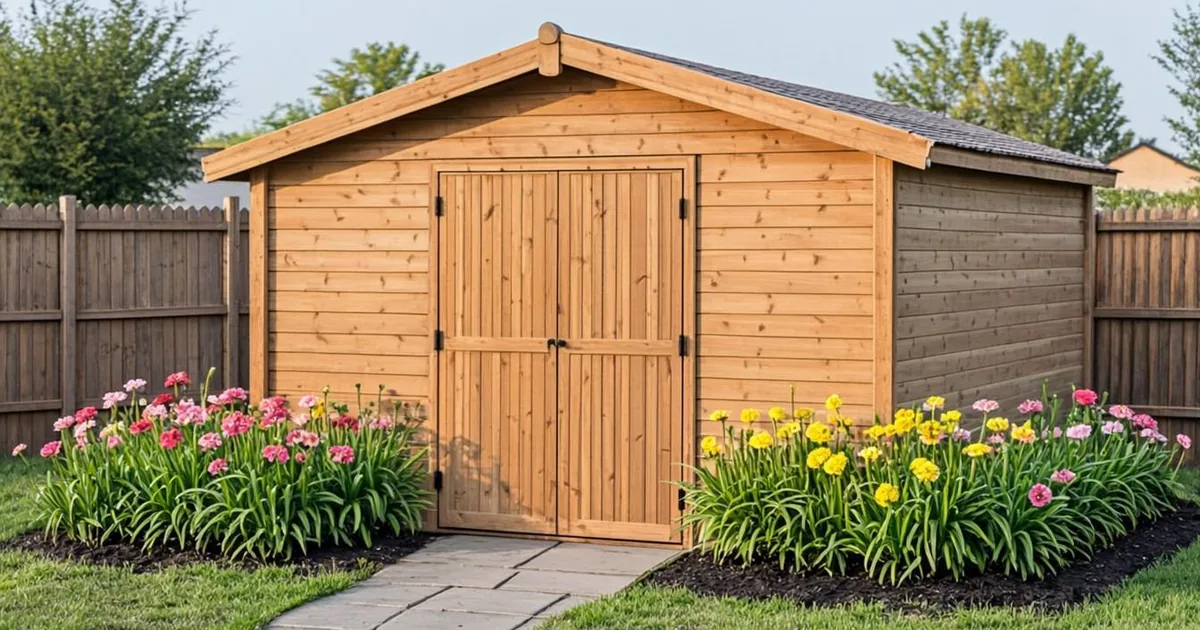
- Materials and color — the polarizing one: many associations require siding and shingles that match the primary house, which quietly bans vinyl and metal kits
- Approval process — written application to the architectural committee before installation, no exceptions for "temporary" units
- Use restrictions — no habitation, no business storage visible from outside, no vehicle repair
Metal and resin prefab sheds bear the brunt: they fail the materials test almost by definition. If your association's guidelines say "exterior surfaces shall match the primary dwelling," the gray steel box from the big-box store is dead on arrival — and the appeal that "it's smaller than the neighbor's" carries no weight against written standards.
The Approval Process and Your State's Clock
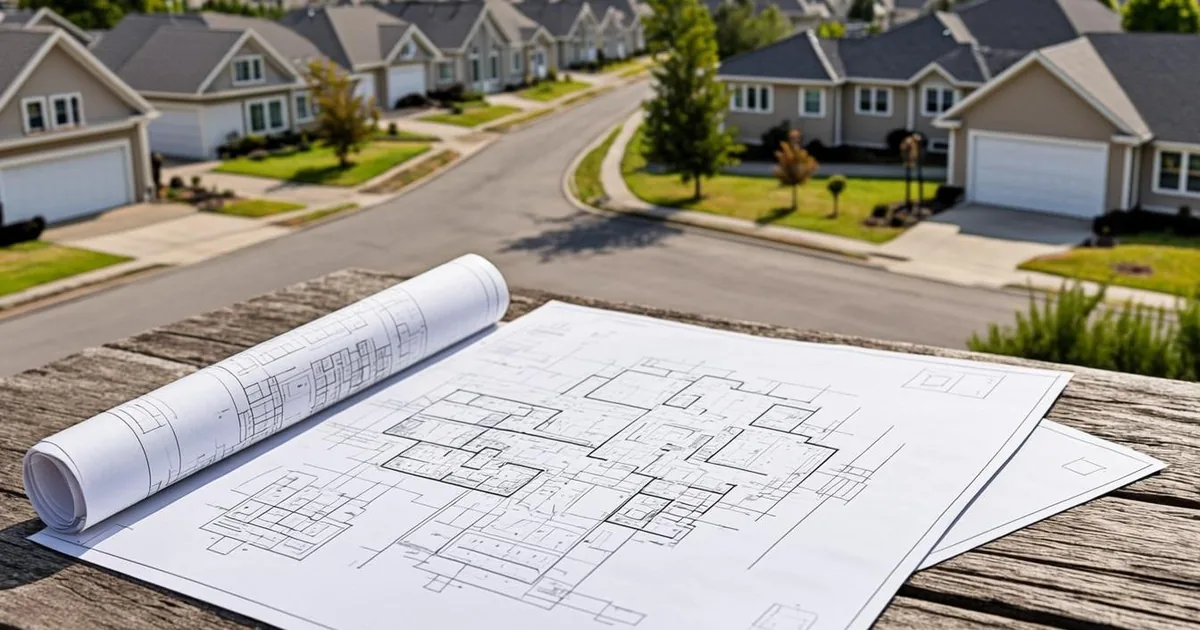
Submitting a shed application follows the same architecture-committee machinery as bigger projects — our architectural review walkthrough covers the committee's side in depth. For sheds specifically, the package is lighter: site plan showing placement, product sheet with dimensions and colors, sometimes a material sample.
The difference from five years ago is that state law now regulates the review itself in the big-HOA states:
| State | Statute | What it guarantees |
|---|---|---|
| California | Civil Code §4765 | Written decisions, 45-day window, deemed approval if the association misses it, "fair, reasonable and expeditious" standard |
| Florida | Ch. 720, §720.3035 | Written application procedures the association must actually follow; enforcement and fines run through §720.305 |
| Arizona | A.R.S. §33-1804 | 30-day decision window for improvement requests; a political-sign-style carve-out protects certain installations |
The California Attorney General's HOA resource page summarizes homeowner rights in plain language. Note what the statutes don't do: none of them stops an association from regulating sheds. They regulate how — timelines, written standards, appeal rights — which is exactly the leverage you want when a committee drifts.
HOA Rules vs. City Rules: The Overlap Map
The shed question stacks three independent rulebooks, and each one can kill the project independently:
- City zoning — setbacks, lot coverage, accessory structure definitions; the layer our HOA-and-permit guide untangles
- City building code — the 200-square-foot permit exemption and its conditions
- HOA covenants — size, placement, materials, and the approval requirement
Four outcomes fall out of the stack. City-exempt + HOA-approved: build freely. City-exempt + HOA-restricted: the HOA rules govern — no permit needed, but the committee's conditions bind. City-permitted + HOA-approved: both tracks, permit first after approval. Any project failing one layer: dead until redesigned, regardless of the other layers' answers.
The distinction that matters legally: the city can't enforce covenants, and the HOA can't waive code. The HOA-vs-city comparison guide maps who has authority over what — worth ten minutes before any exterior project in a planned community.
When the Shed Is Already Installed
The violation letter arrives, and now what? The response ladder, in the order that actually works:
- Read the letter against the guidelines. A violation citing a specific rule section is real; a vague one is an opening.
- Apply retroactively. Many associations will approve a shed that otherwise complies, treating the application as a cure — cheaper for everyone than removal.
- Negotiate mitigation. Sometimes compliance is achievable in place: repaint to match the house, add a matching roof, relocate to behind the rear line.
- Use the hearing. Florida and most states guarantee a hearing before fines; show up with the guidelines, photos, and a proposal.
- Know the fine caps. Florida's $100-per-violation / $1,000-aggregate cap under §720.305 has an exception that matters: "uncured" continuing violations and document-specified higher amounts. Other states vary from strict caps to none.
- Escalate carefully. Removal demands and attorney letters are the endgame, and courts do order removal of non-conforming structures. At that stage, a real estate attorney costs less than the fight.
⚠️ Warning: Don't sell-the-house-before-the-fine logic your way into ignoring the letter. Unresolved HOA violations surface in resale disclosures and estoppel letters — the certificate a Florida buyer's attorney pulls at closing — and they either scare off buyers or become your negotiation discount at the worst possible moment.
What HOAs Legally Can't Do (the Practical Version)
Statutes have carved real protections into the shed-adjacent space, and knowing them changes negotiations:
- Solar devices — associations can't ban rooftop solar in California (Civil Code §714), Florida, Arizona, and most sun-belt states; ground-mounted systems and shed-mounted panels face more leeway but not blanket bans in most versions
- Flags and political signs — federal and state carve-outs limit enforcement
- Reasonable standards only — California's "fair, reasonable and expeditious" language and similar statutes elsewhere give you a legal hook against guidelines that exist only in a board member's memory
- Written procedures — an association that can't produce its written architectural procedures is vulnerable on every enforcement step that skipped them
What no statute protects: your desire for a 12×24 steel workshop in the side yard of a community whose guidelines cap sheds at 120 square feet behind the rear line. The fix is redesign or amendment — covenants change when a supermajority of owners vote, which is a longer project than any shed.
💡 Tip: Buying into an HOA soon? Request the full architectural guidelines — not just the CC&Rs — before closing, and read the accessory-structure section specifically. The guidelines are the document that decides whether your workshop dreams survive, and the CC&Rs alone won't tell you.
HOA Shed and Outbuilding FAQs
Can an HOA ban sheds completely?
Yes, if the covenants say so — courts enforce recorded restrictions. More commonly, guidelines regulate rather than ban: size caps, placement rules, and material matching. Check both the CC&Rs and the current architectural guidelines, because the guidelines carry the specifics.
Does my shed need HOA approval if the city doesn't require a permit?
Yes. The city permit and the HOA approval are independent. Shed projects are the classic case of city-exempt, HOA-required — and installing without the committee's blessing is how violation letters happen.
How much can my HOA fine me for an unapproved shed?
State law caps it in several states — Florida runs $100 per violation with a $1,000 aggregate for continuing violations unless the documents specify more. Where no statute applies, the covenant's fine schedule governs. Fines aren't the worst outcome though: removal demands don't have caps.
What if my HOA has no written shed rules?
Then approval decisions fall to the general "architectural control" covenant — which requires the association to act reasonably and consistently with how it's treated other owners. Document everything, and California-style statutes give you deemed-approval leverage where they apply.
Can the HOA force me to remove a shed that was already here when I bought?
Pre-existing non-conforming sheds occupy murky ground — enforcement discretion and estoppel arguments (the association ignored it for years) both cut in your favor. But if the violation was recent and visible, removal demands stick. Get the association's file through a records request before spending money on a lawyer.
Do these rules apply to greenhouses and playsets?
Usually, yes — "outbuilding" and "structure" language in covenants reaches greenhouses, playsets with roofs, pergolas, and sometimes trampolines. If it has a roof and sits on the ground for more than a season, ask the committee before buying it.
The Shed Plan That Survives an HOA
✅ Key takeaway: Read the architectural guidelines first, design to their size/placement/material numbers instead of the city's, submit the application with a site plan and product sheet, and calendar your state's statutory review clock. The city permit — if one is even needed — comes after the committee's letter, not before. A shed that survives both rulebooks on paper never has to survive a hearing in person.